
Top dungeon crawler games with permadeath can feel unfair at first, then weirdly addictive once you realize the whole point is learning through loss.
If you’ve bounced off permadeath before, you’re not alone. A lot of dungeon crawlers look similar on the surface, but the permadeath rules underneath can change everything: pacing, build choices, risk tolerance, even how you read a room.
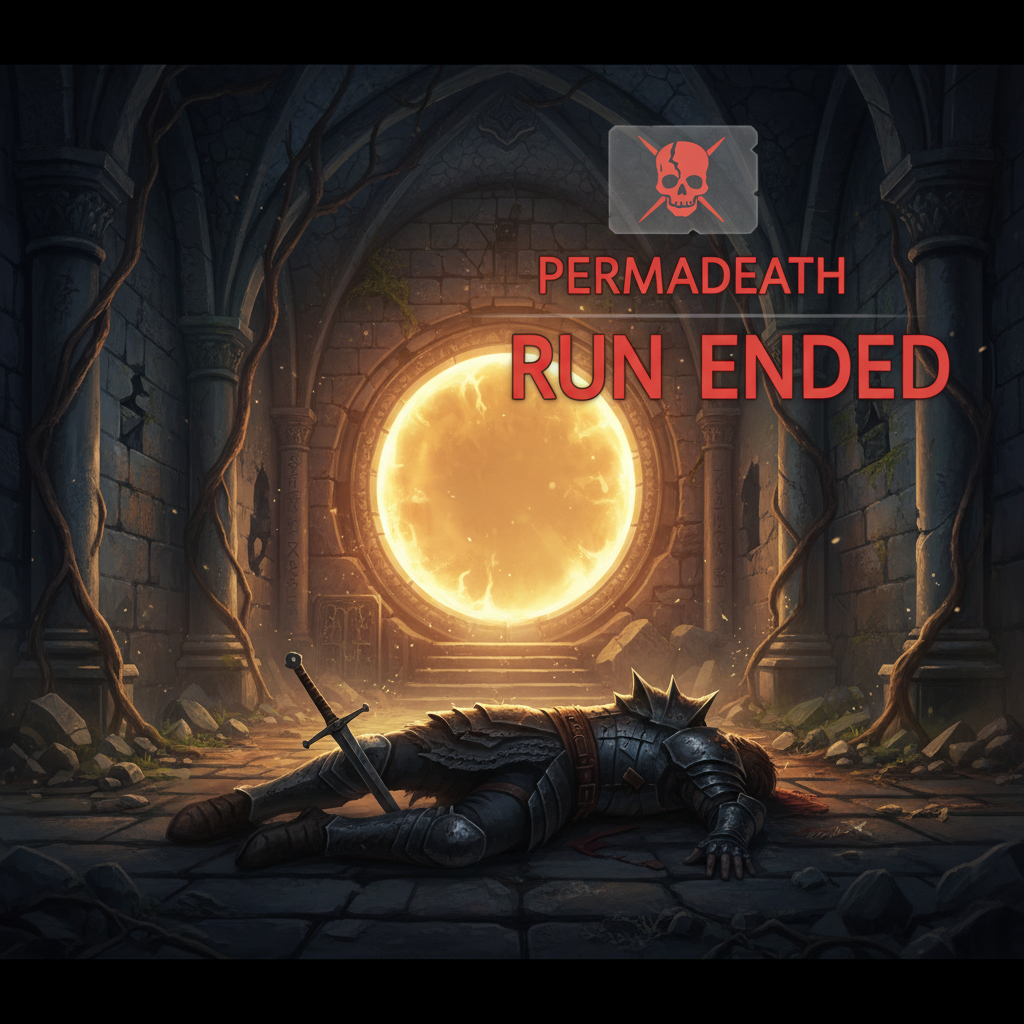
This guide focuses on games where permadeath is central, not an optional checkbox you never touch. You’ll get a quick comparison table, a short “which one fits me” checklist, plus practical tips to make permadeath less punishing without watering it down.
What permadeath changes in a dungeon crawler (and why it matters)
Permadeath isn’t just “you die, you restart.” In dungeon crawlers, it usually reshapes three big things: information, resources, and decision pressure.
- Information becomes valuable: enemy patterns, room layouts, trap tells, item interactions. Knowledge replaces grinding.
- Resources become long-term choices: potions you “save for later” often become potions you never use, then you die with a full backpack.
- Every fight has a cost: even winning can be wrong if it burns health or consumables you’ll need for a boss two rooms later.
One more nuance: some games use “true permadeath,” others use run-based permadeath with meta-progression where you keep unlocks, currencies, or account-level upgrades. That difference should drive your pick.
Quick comparison: top picks at a glance
Here’s a practical snapshot. Exact difficulty varies by player skill and platform, but this gives you the “shape” of each game.
| Game | Perspective | Permadeath style | Runs feel like… | Best for |
|---|---|---|---|---|
| Hades | Isometric action | Run-based + strong meta | Fast, reactive | Action-first players who still want story |
| Darkest Dungeon | Side-view tactics | Hero death persists | Stressful, planning-heavy | People who like consequences and management |
| Dungeon Crawl Stone Soup | Top-down ASCII/tiles | True permadeath | Methodical, knowledge-driven | Classic roguelike purists |
| NetHack | Top-down ASCII/tiles | True permadeath | Surprising, systems-heavy | Experimenters who enjoy deep simulation |
| Spelunky 2 | 2D platform dungeon | True-ish run reset | Chaotic, precision | Players who like “one mistake snowballs” |
| Enter the Gungeon | Top-down shooter | Run-based + unlocks | Bullet-hell, pattern learning | Dodging and aiming fans |
| FTL: Faster Than Light | Ship tactics (dungeon-like sectors) | True run loss | Strategic, crisis management | People who like “plans go wrong” stories |

The list: top dungeon crawler games with permadeath (and who they fit)
Below are picks that players commonly mention when they want high-stakes dungeon runs. I’m mixing modern “roguelites” and classic roguelikes on purpose, because permadeath hits differently depending on how much the game lets you carry forward.
Hades
Permadeath here is a loop, not a wall. Runs end often, but the game respects your time with fast combat, clear telegraphs, and meaningful upgrades back at the hub.
- Why it works: you learn bosses quickly, and meta-progression smooths early frustration.
- Watch out for: if you want “nothing carries over,” this may feel too forgiving.
Darkest Dungeon
If you want consequences that sting, this is the one people point to. Characters can die permanently, and stress can spiral into bad decisions even when you technically “win” fights.
- Why it works: the tension comes from attrition and psychology, not just DPS.
- Watch out for: it can feel punitive if you dislike management layers.
Dungeon Crawl Stone Soup (DCSS)
A modern classic roguelike built around clarity and balance, especially compared with older “gotcha” designs. Death is final, but most losses trace back to a decision you can name.
- Why it works: deep builds, readable systems, strong community knowledge.
- Watch out for: the learning curve is real, and runs can be long.
NetHack
NetHack is permadeath with a huge simulation sandbox. You die to combat, yes, but also to curiosity, greed, and weird item interactions you didn’t realize were possible.
- Why it works: emergent stories and “I can’t believe that happened” moments.
- Watch out for: some deaths can feel opaque until you learn the language of the game.
Spelunky 2
Not a traditional top-down crawler, but it absolutely scratches the dungeon run itch. Permadeath punishes sloppy movement, and the game loves chain reactions.
- Why it works: skill expression is obvious and satisfying.
- Watch out for: frustration tolerance required; it’s intentionally unforgiving.
Enter the Gungeon
Permadeath is the structure, but the vibe is playful. You’ll unlock items and weapons over time, and runs become a mix of aim, dodge timing, and knowing when to blank.
- Why it works: tight controls, huge variety, strong replayability.
- Watch out for: visual noise can overwhelm players new to bullet-hell patterns.
FTL: Faster Than Light
It’s not a dungeon in the literal sense, but the sector map behaves like one: limited choices, branching paths, escalating threats, and a final boss that checks your preparedness.
- Why it works: permadeath turns every “minor” decision into a campaign-defining moment.
- Watch out for: you can lose to bad matchups, though smart routing reduces that risk.
Self-check: which permadeath dungeon crawler should you start with?
If you only pick one game from the top dungeon crawler games with permadeath conversation, match the type of punishment you can tolerate. That’s usually the real blocker, not difficulty itself.
- I want action and I’m okay dying a lot, but I need momentum: Hades, Enter the Gungeon
- I want turn-based thinking and I like learning systems: Dungeon Crawl Stone Soup, NetHack
- I want “my mistakes cost me characters,” not just a run: Darkest Dungeon
- I like tight movement and precision under pressure: Spelunky 2
- I prefer strategy and improvising under scarcity: FTL
Also ask one blunt question: do you want meta-progression to soften the edges, or do you want a clean reset every time? Many people think they want true permadeath, then realize they mainly wanted higher stakes, not a full wipe.

Practical tips to survive permadeath without killing the fun
Permadeath gets better when you treat each run like a small research project. Not spreadsheets, just a couple habits that prevent avoidable losses.
- Spend resources earlier than you want to. If a potion prevents a death, it’s already “worth it.”
- Define a retreat rule. Example: if you lose 40% HP before the floor midpoint, you pivot to exit hunting.
- Stop “testing” unfamiliar items in dangerous rooms. Curiosity kills more runs than bosses, especially in classic roguelikes.
- Pick one build theme per run. Hybrid builds can work, but many losses come from being mediocre at everything.
- Record one sentence after a death. “Died because I chased damage over defense” beats “game is unfair.”
According to the Entertainment Software Association (ESA), players commonly value games for challenge and fun. Permadeath tends to amplify both, but only if you keep your learning loop intact rather than grinding while tilted.
Common mistakes people make when shopping for permadeath crawlers
A few traps show up constantly in reviews and forum threads, and they’re easy to avoid once you name them.
- Confusing “hard” with “punishing.” Some games are difficult but readable, others are easy until a sudden wipe. Decide which you can live with.
- Ignoring run length. True permadeath feels different when a run is 20 minutes vs 3 hours.
- Overvaluing tier lists. The best pick is often the one whose failure mode you tolerate: slow attrition, burst damage, or chaos.
- Forcing “no meta upgrades” as a badge of honor. If you’re bouncing off, a roguelite structure can be the on-ramp, not a compromise.
When to look up guides or ask for help
Permadeath communities can be great, but timing matters. If you look up everything too early, you flatten the discovery that makes these games special.
- Good time to ask: you die to the same boss pattern three runs in a row and can’t identify the tell.
- Good time to read basics: you keep losing to “mystery” mechanics like status effects, hunger systems, or stress spirals.
- Maybe hold off: you’re still enjoying experimentation and deaths feel informative, not random.
If a game’s difficulty is affecting your mood more than your fun, step away for a bit. That’s not a skill issue, it’s just how high-stakes loops land for a lot of people.
Key takeaways and a simple next step
The best top dungeon crawler games with permadeath are the ones where you can clearly see why you lost, then feel tempted to try again with a smarter plan.
- If you want fast runs and narrative momentum: start with Hades.
- If you want deep classic permadeath learning: try Dungeon Crawl Stone Soup, then graduate to NetHack if you like the weirdness.
Pick one game, commit to ten runs, and keep a tiny “death note” after each. You’ll be surprised how quickly permadeath stops feeling like robbery and starts feeling like mastery.
FAQ
What does permadeath mean in dungeon crawler games?
It usually means death ends your character or run permanently. Some games reset everything, while others keep unlocks or currencies that make future runs easier.
Are roguelites “real” permadeath games?
They still use permadeath at the run level, but meta-progression softens the reset. If you want pure wipes, look at traditional roguelikes like DCSS or NetHack.
Which permadeath dungeon crawler is most beginner-friendly?
Many players find Hades approachable because combat feedback is clear and the game rewards repetition with story and upgrades, even when runs fail.
Do permadeath games rely on luck too much?
Some randomness is standard, but good designs let skill and decision-making dominate over time. If losses feel unexplainable, that title may not match what you want.
How do I get better at permadeath without reading spoilers?
Focus on one improvement per run, like better retreat timing or smarter resource use. You can also watch short “beginner tips” videos that avoid late-game spoilers.
What’s the difference between a dungeon crawler and a roguelike?
There’s overlap. Roguelikes are often dungeon crawlers with procedural levels and true permadeath, while “dungeon crawler” can include broader styles like action ARPGs or tactical crawls.
Is Darkest Dungeon permadeath or just difficult?
It includes persistent character death and campaign consequences, so it lands closer to permadeath than many run-based games, even though the structure is different from a classic roguelike.
What should I play if I like permadeath but hate long runs?
Look for shorter-loop games like Enter the Gungeon or Spelunky 2, where a full attempt tends to be tighter and resets don’t wipe hours of progress.
If you’re trying to pick from the top dungeon crawler games with permadeath and want a shorter shortlist based on your platform, time per run, and tolerance for true wipes, share those three details and it becomes much easier to recommend something you’ll actually stick with.