
best games with post cyberpunk settings tend to scratch a specific itch: the neon has faded, the megacorp billboards still hum, and people are left improvising a life in the afterglow of tech. If you keep bouncing off “pure cyberpunk” lists, it’s usually because those games lean hard on shiny chrome and corporate power, while you want the aftermath—ruins, black markets, rust, and communities adapting.
That distinction matters more than it sounds, because it changes what “good” looks like: you’re often chasing mood, environmental storytelling, and social fallout, not just hacking minigames. The right pick can feel less like a power fantasy and more like a late-night walk through a world that kept going after the big promises collapsed.
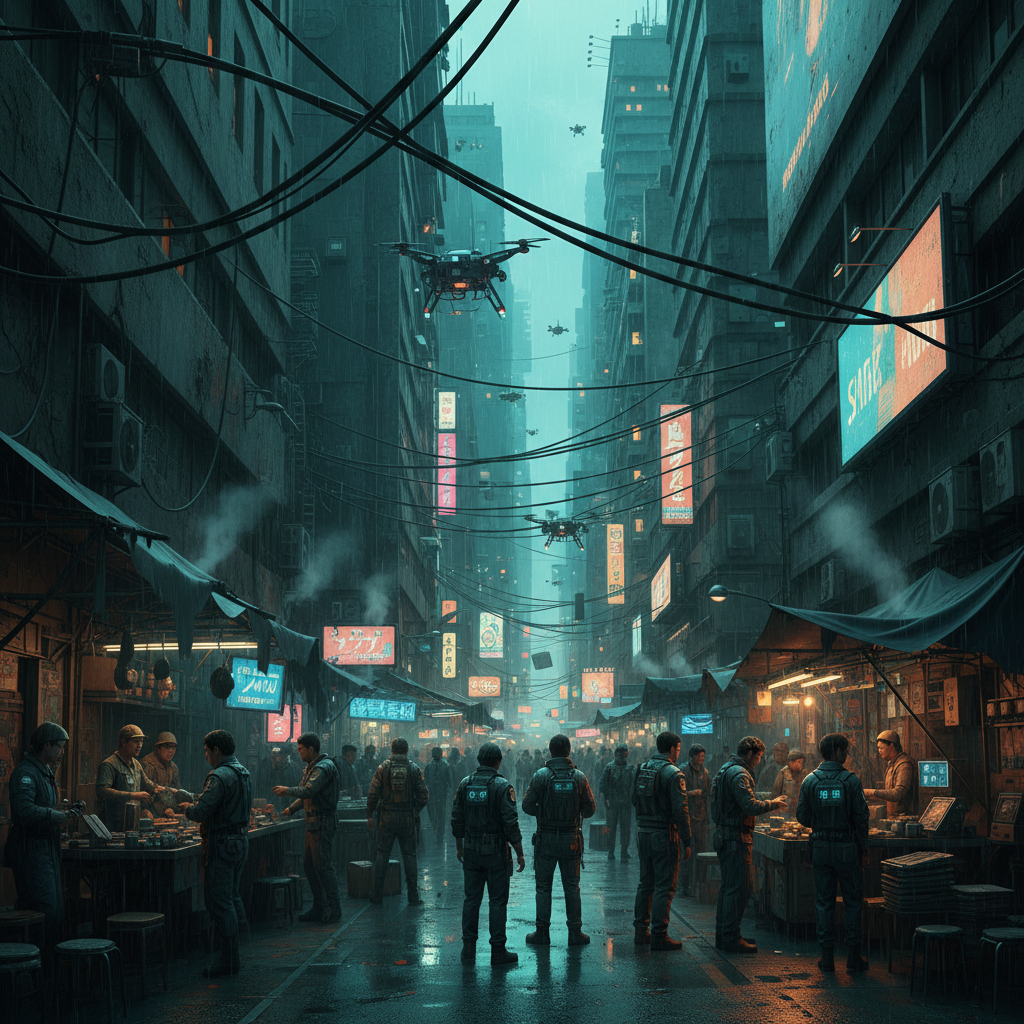
Below, I’ll define what “post-cyberpunk” usually means in games, give you a quick way to self-sort your tastes, then recommend titles that reliably deliver that “after the boom” tone. You’ll also get a comparison table, a few practical buying tips, and some common traps that make people pick the wrong game for this subgenre.
What “post-cyberpunk” means in games (and what it doesn’t)
Post-cyberpunk usually keeps the core ingredients—high tech, networked life, surveillance, augmentation—but shifts the message. Instead of “tech + megacorps inevitably crush you,” it often asks how people live with the system, hack around it, or rebuild when the old order cracks.
- Less glam, more residue: worn infrastructure, patchwork repairs, secondhand implants, gray-market tools.
- More community friction: unions, neighborhoods, mutual aid, criminal micro-economies, local politics.
- Tech feels normal: it’s embedded in daily life, not presented as a magical novelty.
- Moral choices get messier: not “topple the corp,” but “keep the lights on without becoming the corp.”
What it’s not: straightforward “neon-noir cyberpunk” where style dominates substance, or far-future transhumanist sci-fi that drops the urban, social, and economic grounding.
A quick self-check: which post-cyberpunk flavor do you want?
People search for best games with post cyberpunk settings for different reasons, and the fastest way to avoid a mismatch is to pick your primary hook.
- “I want a lived-in city after the hype” → look for dense hubs, side stories, factions, and environmental detail.
- “I want the social consequences of tech” → prioritize narrative games with surveillance, identity, labor, or privacy themes.
- “I still want combat and builds” → pick RPGs/shooters where tech is practical and worn, not shiny and heroic.
- “I want weird philosophy” → go for slower sci-fi that treats post-cyberpunk like a question, not a costume.
Key point: if you mainly want neon aesthetics, you may be happier with classic cyberpunk picks. Post-cyberpunk hits hardest when you like the “day after” feeling.
Best games with post-cyberpunk settings (editor-curated picks)
This list leans on games that either explicitly sit in a post-cyberpunk tradition, or consistently deliver that “tech-normalized, society-adapting” tone.
Deus Ex: Human Revolution
Still one of the cleanest examples of post-cyberpunk in mainstream games: augmentations are everywhere, political compromise is constant, and the vibe is more corporate pragmatism than neon romance. It’s also great if you like choice-driven missions with stealth, hacking, and social engineering.
Deus Ex: Mankind Divided
More localized and more bitter, with segregation, policing, and propaganda pushed front and center. If you want the “aftershocks” of augmentation going mainstream, it lands. Expect a smaller-feeling world than HR, but with dense detail.

Citizen Sleeper
If you care more about systems and people than firefights, this is a strong fit. It frames corporate ownership, precarity, and found-family dynamics through a tabletop-like structure. The setting feels post-cyberpunk because the tech isn’t “cool,” it’s a constraint you negotiate.
Cloudpunk
Not strictly “after the fall,” but it nails the everyday-life angle: deliveries, small-time stories, and a city that runs on exploited labor. It’s a calmer pick—more vibes and vignettes than high-stakes power scaling.
Watch Dogs 2
It’s modern-day adjacent rather than future-forward, but thematically it’s often closer to post-cyberpunk than many neon classics: ubiquitous devices, surveillance capitalism, social engineering, and activism with consequences. If you want an open world where tech already won and you’re pushing back from inside the culture, it works.
Observer: System Redux
More horror-leaning and intense, but it’s a good example of “what’s left of humanity when the interfaces are everywhere.” Choose it when you want oppressive atmosphere, unreliable perception, and a grimy future that feels like it kept decaying.
The Ascent
Top-down action with a strong “corporate ruin” vibe: broken systems, gangs filling the gaps, and a world that feels like it’s running on emergency power. Narrative depth varies, but the setting screams post-cyberpunk aftermath.
Ruiner
A faster, sharper pick: minimal downtime, heavy pressure, and a bleak city vibe where tech-enhanced violence looks less like empowerment and more like damage. Great if you want the aesthetic plus momentum, not a long RPG.
Comparison table: pick the right game fast
If you’re trying to decide in five minutes, this table is the shortcut I wish more lists provided.
| Game | Best for | Core feel | Intensity |
|---|---|---|---|
| Deus Ex: Human Revolution | Immersive sim + choices | Corporate-era fallout, pragmatic noir | Medium |
| Deus Ex: Mankind Divided | Social themes + dense hubs | Segregation, surveillance, tension | Medium |
| Citizen Sleeper | Narrative + survival pressure | Precarity, community, systems | Low-Med |
| Cloudpunk | Relaxed exploration + stories | Everyday work in a tech city | Low |
| Watch Dogs 2 | Modern post-cyberpunk sandbox | Surveillance culture, hacking activism | Medium |
| Observer: System Redux | Psychological horror sci-fi | Decay, mind tech, dread | High |
| The Ascent | Co-op action + corporate collapse | Gangs, breakdown, spectacle | High |
| Ruiner | Fast action + bleak vibe | Violence as symptom, not style | High |
How to choose what to play next (practical steps)
Here’s a simple way to shop or pick from your backlog without overthinking.
- Decide your “frame” first: do you want a city sim feel (Cloudpunk), a moral RPG (Deus Ex), or a pressure-cooker narrative (Citizen Sleeper)?
- Check your tolerance for bleakness: Observer and Ruiner can feel heavy, while Watch Dogs 2 and Cloudpunk often breathe more.
- Look at session length: if you play in 30–60 minute chunks, vignette-driven games tend to click better than sprawling immersive sims.
- Don’t ignore accessibility and comfort: motion sensitivity, horror intensity, and difficulty spikes can quietly ruin the vibe.
According to the ESRB, rating summaries can help you quickly screen content themes and intensity before you buy, especially for horror-leaning or violent entries.

Small but useful trick: watch 10 minutes of mid-game footage, not the trailer. Trailers sell “cyberpunk cool,” mid-game shows whether the world feels lived-in and post-hype.
Common mistakes when hunting post-cyberpunk games
- Confusing aesthetic with theme: neon signs don’t automatically mean post-cyberpunk, sometimes it’s just cyberpunk styling with no aftermath angle.
- Expecting every game to be an RPG: some of the strongest entries are narrative or exploration-first, and that’s kind of the point.
- Ignoring the “normalization” factor: post-cyberpunk often works because tech feels boring and invasive at the same time.
- Buying for “freedom” and getting “friction”: many settings emphasize constraint, debt, surveillance, and compromise, that mood is the feature.
Key takeaways (so you don’t leave with a longer wishlist)
- Post-cyberpunk is about life after the tech promise. Look for worlds where people adapt, not just rebel in style.
- Pick by your hook: city-life vibe, social themes, action builds, or philosophical sci-fi.
- Start with a “safe” anchor: Deus Ex (HR/MD) if you want the classic game-y structure, Citizen Sleeper if you want the human cost.
Conclusion: a good post-cyberpunk game feels like the morning after
The best games with post cyberpunk settings don’t just show flashy tech, they show what happens when that tech becomes infrastructure, policy, debt, and habit. If you want a single starting point, pick Deus Ex: Human Revolution for the balanced, accessible entry, or Citizen Sleeper if you want the quieter, more personal version of the genre.
Choose one game that matches your tolerance for bleakness, then commit to a few sessions before switching, these worlds take a little time to sink in, and that slow burn is usually where the payoff lives.
FAQ
What are the best games with post cyberpunk settings for story?
Citizen Sleeper is a strong story-first pick, and Deus Ex (HR/MD) works well if you want story plus agency. If you prefer darker psychological themes, Observer: System Redux may fit, but it’s heavier.
Is post-cyberpunk the same as cyberpunk?
They overlap, but post-cyberpunk usually shifts from “noir rebellion against megacorps” toward “how society adapts after tech becomes normal.” In practice that means less glam, more consequence, and more day-to-day survival logic.
Which post-cyberpunk games are good if I don’t like horror?
Skip Observer if you’re horror-averse, and start with Cloudpunk, Watch Dogs 2, or Citizen Sleeper depending on whether you want exploration, open-world mischief, or narrative choices.
What should I play if I want action but still want the “aftermath” vibe?
The Ascent gives you fast combat with a world that feels like corporate order already broke, while Ruiner is more intense and linear. If you want action plus decisions, Deus Ex sits in the middle.
Are there any modern-day games that still feel post-cyberpunk?
Yes, that’s why Watch Dogs 2 comes up often: it treats surveillance and platform power as everyday reality rather than futuristic spectacle. It’s not “chrome future,” but the themes land.
How do I tell if a game is post-cyberpunk before buying?
Look for language about systems and social fallout in reviews: labor, policing, identity, debt, governance, infrastructure. Also check mid-game footage; if the world feels like people are improvising around broken promises, you’re close.
Do I need to play Deus Ex in order?
Most people start with Human Revolution and then play Mankind Divided. You can jump in, but playing HR first usually makes the social and political context in MD easier to read.
If you want a more tailored shortlist
If you’re trying to choose between a few options, tell me your platform, how much combat you want, and whether you prefer “cozy melancholy” or “hard dystopia,” and I can narrow the list to 3 picks that match your taste without sending you into another endless wishlist spiral.