best vr brain training games can be a surprisingly practical way to make “brain training” feel less like homework and more like a habit you’ll actually keep, especially if you like immediate feedback, short sessions, and clear progression.
That said, VR does not magically “boost IQ,” and a lot of people get disappointed because they expect one app to fix focus, memory, and stress all at once. In real life, what tends to work better is matching the game type to a specific mental skill, then playing in a steady, low-friction routine.
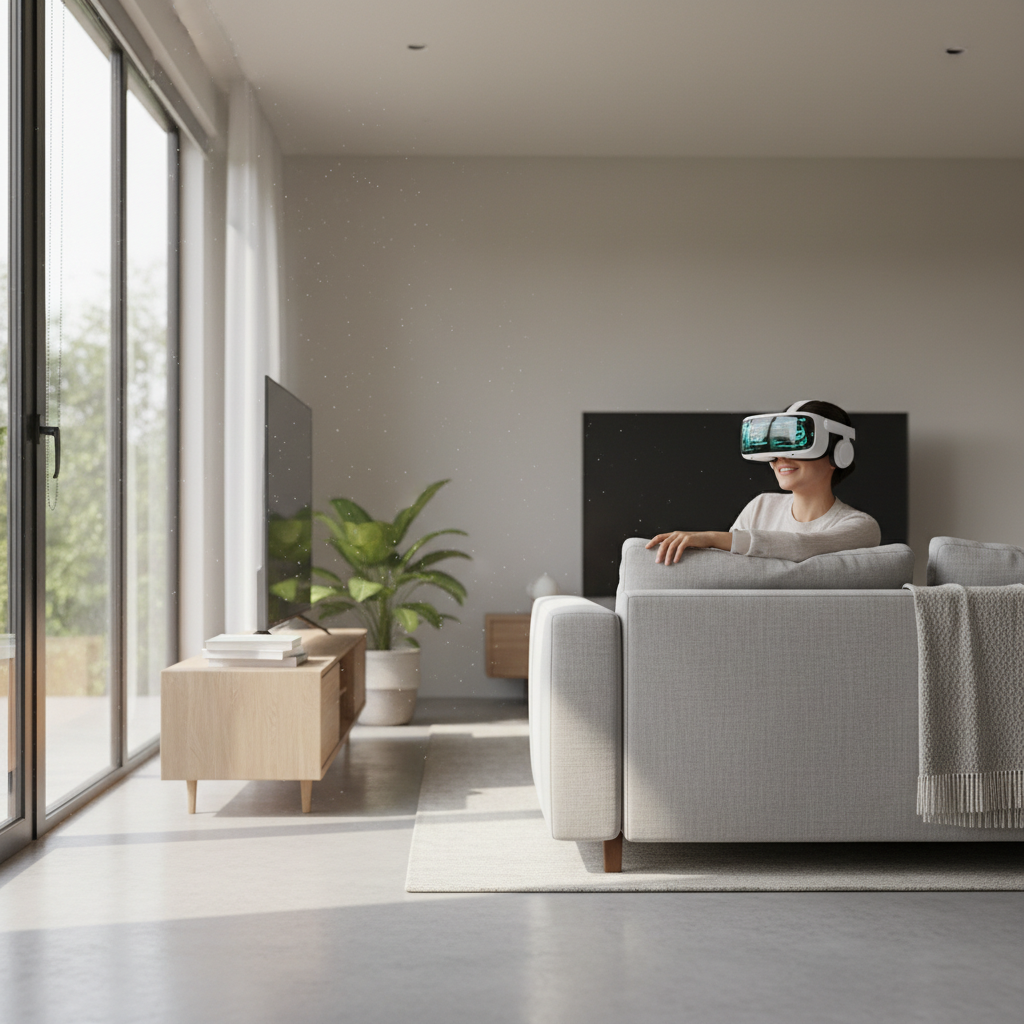
This guide helps you choose VR titles that target attention, reaction speed, coordination, spatial skills, and mindfulness, plus a simple way to test whether a game is “training” your brain or just entertaining you.
What “brain training” in VR really means (and what it doesn’t)
In VR, “brain training” usually means structured tasks that challenge attention, working memory, processing speed, spatial reasoning, or sensorimotor coordination. Many games hit at least one of these, even if they are not marketed as cognitive training.
What it often doesn’t mean is guaranteed transfer to every part of daily life. Skill transfer can happen, but it’s uneven: you might get faster at pattern recognition in-game, yet only see modest real-world changes unless you pair it with sleep, movement, and task-specific practice.
According to the American Academy of Ophthalmology, some people may experience eye strain or discomfort during screen-based activities, and VR can amplify that for certain users, so it’s smart to treat this like exercise: build up gradually, take breaks, and stop if symptoms show up.
Quick picks: best VR brain training games by goal
If you want a short list that covers the most common “brain training” intents, start here. These are popular VR choices in the U.S. market, and they map cleanly to specific skills.
| Goal | Good VR game types | Why it helps (in plain English) | Typical session |
|---|---|---|---|
| Focus & selective attention | Rhythm, target filtering, fast decision games | Forces you to ignore noise and act on the right cue | 10–20 min |
| Reaction time & processing speed | Arcade dodging, sports drills, timing-based gameplay | Shortens the gap between seeing and doing | 5–15 min |
| Spatial reasoning | 3D puzzles, physics puzzles, room-scale navigation | Trains mental rotation and 3D problem solving | 15–30 min |
| Memory under pressure | Multi-step tasks, pattern recall, sequence challenges | Builds working memory while you’re distracted | 10–20 min |
| Calm & stress downshift | Breath-guided, meditation, relaxing exploration | Improves emotional regulation and consistency | 5–15 min |
Key takeaway: the “best” choice is the one that matches your goal and fits your schedule, not the one with the flashiest trailer.
Why VR can feel more effective than flat-screen brain apps
Many brain-training apps fail for one boring reason: people quit. VR, when it’s comfortable, can increase follow-through because the task feels immersive and immediate.
- Embodied attention: your head and hands become part of the task, which can sharpen focus.
- Cleaner feedback loop: you get instant results, scores, and timing cues that are hard to ignore.
- Better “distraction control” practice: some VR games force you to manage sensory load, which resembles real environments more than a 2D screen.
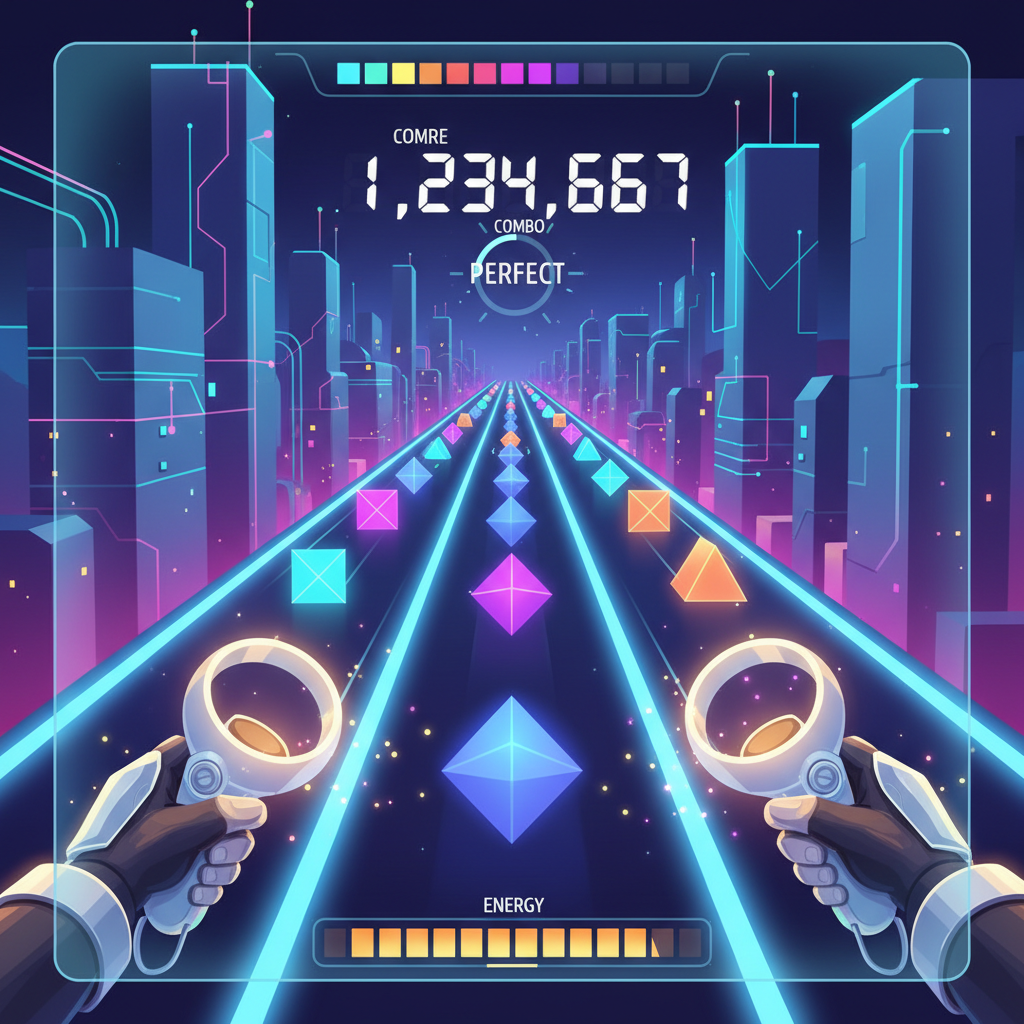
But immersion cuts both ways. If you get motion sickness, headaches, or anxiety spikes, the “training” can backfire because your brain starts associating the headset with discomfort.
A simple checklist to tell if a game is real training (for you)
Not every “brainy” VR title earns a slot in your routine. Use this quick self-check after 2–3 sessions.
- It has measurable difficulty: levels, speed, accuracy requirements, or adaptive scaling.
- You can explain the skill: “This makes me track targets while ignoring decoys,” not just “It’s fun.”
- You can repeat it: you don’t dread opening it, and it works in short sessions.
- It creates productive strain: you feel challenged, not overwhelmed or bored.
- You can see trendlines: even basic stats, like accuracy or time-to-complete, improve over weeks.
If a title checks only the “fun” box, keep it as entertainment, but don’t expect it to function like the best vr brain training games you came here to find.
Game recommendations by training style (with practical examples)
Instead of pretending there’s one perfect list, it’s more useful to group VR games by what they train. Here are categories that usually work well for most people.
1) Rhythm and timing games (attention, inhibition, coordination)
These push you to synchronize vision, timing, and movement. They’re great if you want focus gains you can feel quickly.
- Beat Saber: fast attention switching, bilateral coordination, sustained focus.
- Pistol Whip: rhythm plus target selection, also adds light cardio.
2) Physics and spatial puzzle games (reasoning, planning, mental rotation)
Puzzle VR can be slow in a good way. It’s closer to “think first,” which many action-heavy players miss.
- I Expect You To Die series: escape-room logic under time pressure.
- The Room VR: A Dark Matter: spatial puzzles that reward careful observation.
3) Multi-task and control games (working memory, task switching)
These are useful if your real problem is dropping steps mid-task, like forgetting what you walked into the kitchen for.
- Keep Talking and Nobody Explodes: communication plus memory for procedures, best with a partner.
- Job Simulator or similar task sandboxes: surprisingly decent for sequencing and attention, depending on how you play.
4) Sports and reflex games (processing speed, prediction, hand-eye)
Sports-style VR adds anticipation: you learn to read trajectories and respond early, not late.
- Eleven Table Tennis: reaction, prediction, fine motor control.
- Racket: Nx: tracking, timing, and rapid adjustments.
5) Mindfulness and breath-guided experiences (stress regulation)
Not everyone thinks of this as brain training, but if stress wrecks your focus, calming your nervous system can be the highest-ROI move.
- TRIPP: guided sessions with visuals that many find engaging.
- Guided Meditation VR: structured relaxation and attention practice.
How to build a VR brain training routine that actually sticks
Most people overdo day one, then disappear for two weeks. A routine that sticks is smaller than you think.
- Pick one primary skill for 14 days: focus, speed, spatial, memory, or calm.
- Use a 3-part session: 2 minutes warm-up, 8–15 minutes main game, 1 minute cool-down.
- Track one metric only: accuracy, level reached, average combo, completion time, or perceived exertion.
- Rotate “A/B” titles: one main trainer, one backup for low-energy days.
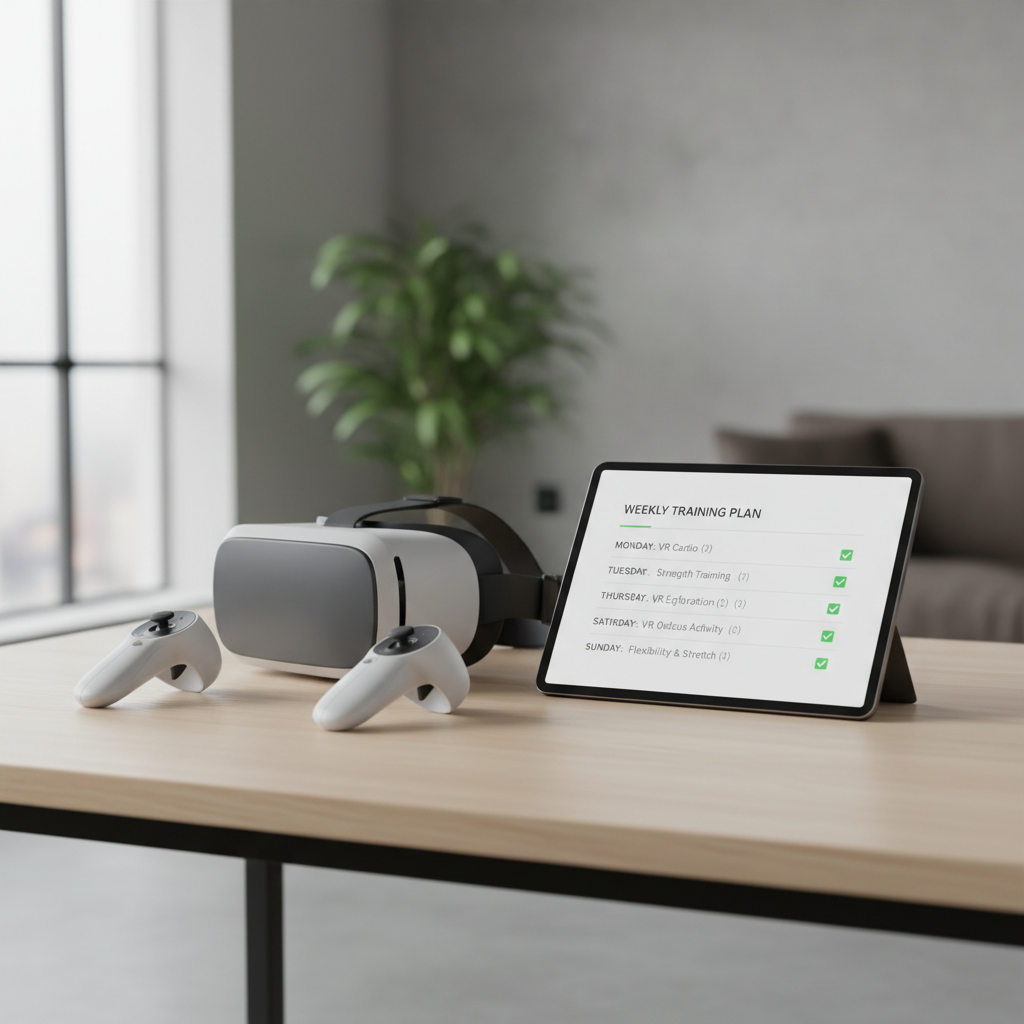
Practical tip: if you only have 10 minutes, do 10 minutes. Consistency beats “perfect sessions,” and it’s the difference between owning games and using them.
Safety, comfort, and common mistakes (so you don’t burn out)
The fastest way to quit VR training is discomfort. A few small adjustments usually matter more than people expect.
- Motion sickness: prefer stationary or room-scale titles, use comfort settings, stop at the first sign of nausea.
- Eye strain: take breaks, adjust headset fit and IPD if available, avoid marathon sessions.
- Neck/shoulder fatigue: keep elbows relaxed, avoid “tensed” posture, shorten sessions for high-intensity rhythm games.
- Chasing novelty: buying five new titles rarely helps; mastery in one game often trains more than dabbling.
- Confusing sweat with progress: cardio is great, but your brain metric still needs a target.
If you have a neurological condition, frequent migraines, vertigo, or vision concerns, it’s reasonable to ask a clinician whether VR use makes sense for you, since tolerance varies widely.
Conclusion: choosing the right games and making progress measurable
The best vr brain training games are the ones that line up with a single goal, challenge you at the right level, and fit into a routine you can repeat without negotiating with yourself every day. Pick one skill, choose one primary game, track one metric for two weeks, then reassess with honest notes.
If you want a low-friction starting point, choose a rhythm game for focus and timing, or a puzzle title for spatial reasoning, then keep sessions short enough that you finish feeling capable rather than cooked.
FAQ
- Do VR brain training games improve memory in real life?
They can help you practice working memory and attention in a structured way, but real-life improvement varies, and it tends to be stronger when you train a specific skill and stay consistent. - How long should I play per day?
Many people do well with 10–20 minutes, especially at the start. Longer sessions are not automatically better if fatigue or discomfort rises. - Are rhythm games actually “brain training”?
Often yes, because they demand timing, selective attention, and inhibition. The key is playing at a challenging level instead of staying on autopilot. - What if I get motion sickness?
Look for stationary gameplay, enable comfort options, and keep sessions short. If symptoms persist, consider stepping back or asking a professional for guidance. - Is VR brain training good for older adults?
It can be, but comfort, balance, and vision needs differ. Starting with seated or low-motion experiences and consulting a clinician for specific concerns is a safer path. - How do I know a game is too easy or too hard?
Too easy feels mindless and your scores plateau; too hard creates sloppy form and frustration. The sweet spot feels challenging but learnable across a week. - Do I need a subscription app for cognitive training?
Not necessarily. Many non-subscription games provide enough structured challenge if you set a goal and track a metric.
If you’re trying to choose between a few titles and want a more “set it and forget it” plan, it can help to list your goal, your headset model, and your comfort limits, then build a two-game rotation you can follow for 14 days without overthinking.