
Roguelite games with permanent progression hit a specific itch: you want the tension of a run that can go sideways fast, but you also want your time to matter even when you wipe. If you’ve bounced off roguelikes because “dying resets everything,” this is the middle ground.
The catch is that “permanent progression” means different things depending on the game. Sometimes it’s a clean power curve that helps you learn, sometimes it’s a slow stat grind that can make early runs feel pointless, and sometimes it quietly changes difficulty in ways players don’t notice until hours later.
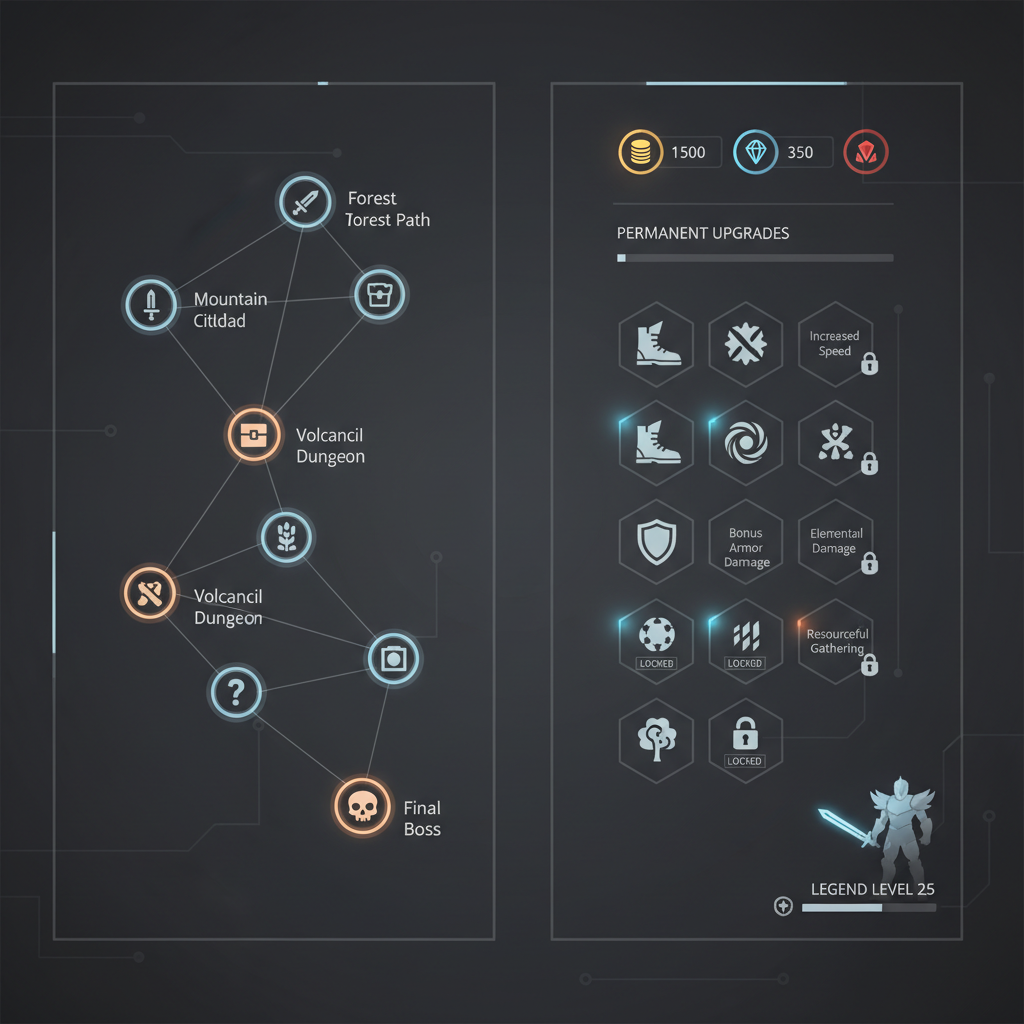
This guide stays practical: what “meta progression” usually includes, how to tell if a game will respect your time, a short list of well-known options by play style, and a few habits that make progression feel satisfying instead of exhausting.
What “Permanent Progression” Actually Means in Roguelites
In roguelites, “permanent progression” typically refers to systems that persist between runs. You still lose the current run on death, but you carry something forward that changes future attempts.
Common forms you’ll see:
- Stat upgrades (health, damage, starting resources). These are the most “RPG-like,” and they can make early difficulty smoother.
- Unlock pools (new weapons, cards, blessings, characters). These don’t always increase raw power, but they expand your options.
- Account-level perks (extra dash, rerolls, improved shops). Often the sweet spot: meaningful but not purely grindy.
- Knowledge progression (enemy patterns, route planning). Not “permanent” in the menu, but still the biggest long-term advantage.
One nuance worth calling out: some games blur the line between “progression” and “difficulty settings.” If upgrades make you dramatically stronger, the early game may feel like a tax you must pay before the real game begins.
Why Players Prefer Roguelite Games With Permanent Progression
People don’t just want power, they want momentum. Permanent unlocks create a feeling that even a bad run contributed to the next one.
In day-to-day play, it often comes down to these motivations:
- Time efficiency: You can play 20–30 minutes and still move forward.
- Difficulty smoothing: Meta upgrades can reduce frustration spikes, especially in the first few hours.
- Variety: Unlock pools keep runs from feeling like the same build repeated.
- Goal clarity: “One more run” becomes “one more unlock,” which feels concrete.
According to Entertainment Software Association (ESA), players commonly value games that fit flexible schedules, and roguelites with run-based structure plus lasting unlocks often match that preference.
Quick Self-Check: What Kind of Permanent Progression Do You Enjoy?
Before you buy anything, it helps to name what you actually want. Two roguelites can both advertise meta progression and still feel totally different.
- You like steady power growth if you enjoy RPG leveling, forgiving early difficulty, and visible numbers going up.
- You like option growth if you want more weapons, more builds, more “I can try this next run.”
- You like mastery-first if you want progression to exist, but not to trivialize gameplay.
- You hate grind if repeating early zones for currency makes you quit fast.
If you recognize the grind aversion, prioritize games where unlocks are tied to varied goals (challenges, milestones, new encounters) rather than pure farming.
A Practical Shortlist: Roguelite Recommendations by Progression Style
There’s no single “best” pick, but there are patterns. Here are well-known roguelite games with permanent progression, grouped by the kind of carryover they emphasize. Availability and platforms can change over time, so treat this as a direction, not a guarantee.
| Game (Example) | Progression Feel | Why People Stick With It | Who It Fits |
|---|---|---|---|
| Hades | Upgrades + story unlocks | Meta upgrades feel earned, narrative rewards persistence | Players who want action + clear long-term goals |
| Dead Cells | Unlock pool + difficulty tiers | New gear changes runs, long tail of mastery | Skill-focused players who still want unlocks |
| Rogue Legacy 2 | Strong stat and town upgrades | Very tangible power ramp between runs | Players who like “build the base, then push further” |
| Slay the Spire | Mostly unlock pool | Progression expands options without heavy stat inflation | Strategy fans who dislike grindy stats |
| Risk of Rain 2 | Unlocks and loadout variety | New items/skills reshape play, co-op friendly | Players who like chaotic builds and replayability |
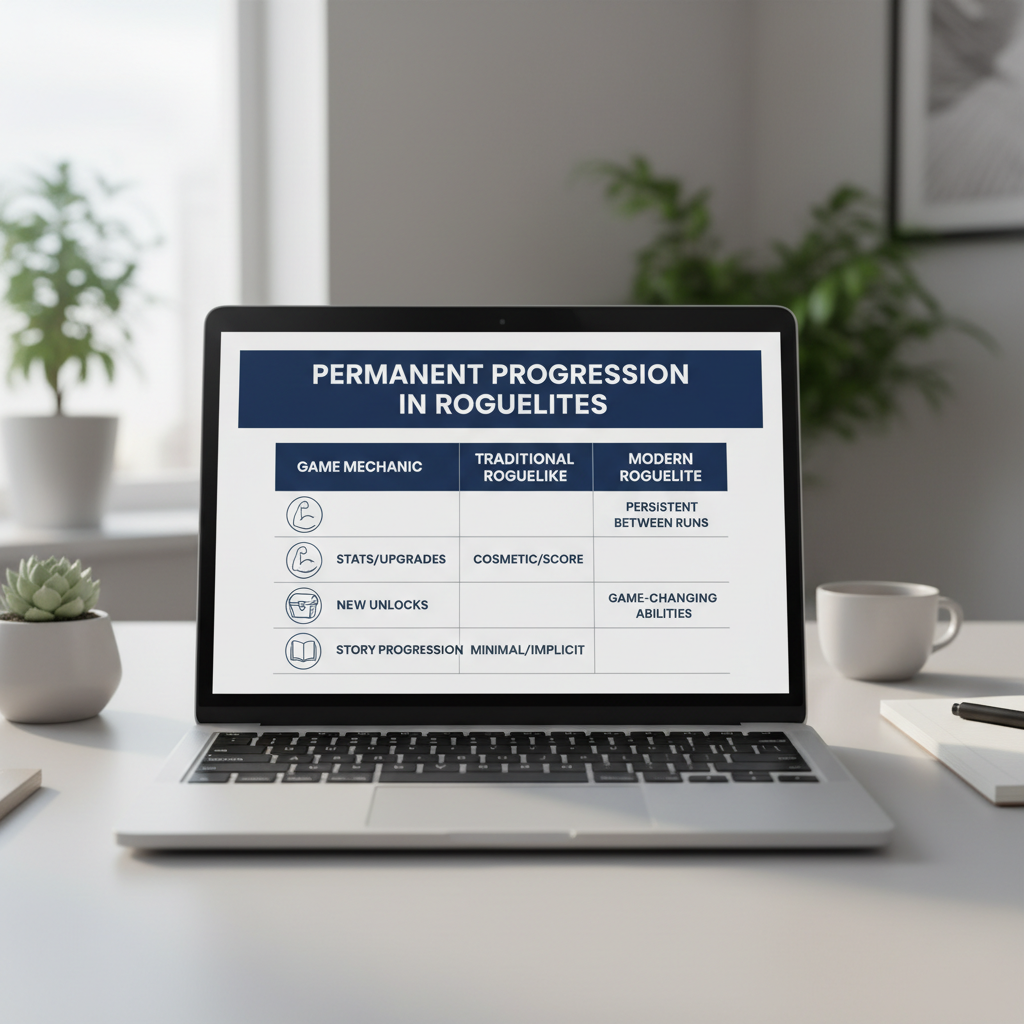
A small editorial opinion: if you’re new, start with a game where permanent upgrades also teach you the systems. When progression is only “+2% damage,” the early learning curve can feel strangely unrewarding.
How to Choose Without Getting Burned by the Grind
Here’s the part most store pages won’t tell you: meta progression can be either a motivation engine or a disguise for repetition. These checks help you spot the difference fast.
Green flags
- Multiple progression tracks: unlocks, narrative, challenges, difficulty modifiers.
- Meaningful early unlocks: you feel change in the first 60–90 minutes.
- Build diversity: new tools alter tactics, not just numbers.
- Run length fits your life: you can complete a “real attempt” in your available time.
Yellow flags
- Currency-only progress where optimal play becomes farming the same safe route.
- Huge upgrade trees with tiny increments, which can push you into “one more run” fatigue.
- Progression that replaces learning: you win because you out-stat the game, not because you improved.
If you’re browsing reviews, look for players describing the midgame: not just “addicting,” but whether the game stays interesting after the first wave of unlocks.
Step-by-Step: Making Permanent Progression Feel Faster (Without Cheating Yourself)
This is the practical loop that helps most people enjoy roguelite games with permanent progression without turning it into a second job.
- Pick one goal per run: a boss attempt, a new weapon test, a resource push, or a story objective. Mixed goals often slow everything down.
- Spend upgrades to reduce frustration: survivability and consistency perks usually beat raw damage early.
- Experiment on “low stakes” runs: use weaker runs to test tools, then use your best setup when you push deeper.
- Stop farming when it stops being fun: if you catch yourself repeating the same easy route, push difficulty or switch objectives.
Key point: if a roguelite’s progression only feels good when you grind, that’s a design choice, not your personal failure. Sometimes the healthiest move is picking a different game style.
Common Mistakes (and Small Fixes That Actually Help)
Most frustration comes from a few predictable traps. Fixing them usually makes the same game feel dramatically better.
- Mistake: Buying only damage upgrades. Fix: invest in economy perks, healing access, rerolls, or consistency tools that prevent “dead runs.”
- Mistake: Treating every run as a serious attempt. Fix: designate some runs as scouting, experimentation, or unlock-chasing.
- Mistake: Ignoring the unlock pool. Fix: prioritize unlocks that widen build paths, even if they don’t look “strong” on paper.
- Mistake: Comparing your pace to streamers. Fix: use your own run length and comfort level as the benchmark, especially early.
According to IGDA (International Game Developers Association), difficulty and accessibility are often discussed as design considerations; if a game offers assist options, using them is a valid way to tune challenge to your preference.
Conclusion: Picking the Right Progression Loop for Your Time
Roguelite games with permanent progression work best when the carryover adds options, nudges you past early friction, and still leaves room for skill to matter. If your upgrades feel exciting and your failed runs still teach you something, you’re in the right subgenre.
Two action steps: write down what you want most, power growth or build variety, then choose a game whose progression system matches that preference. After that, set one clear goal per run for a week, you’ll usually feel momentum fast.
FAQ
What are roguelite games with permanent progression, in plain English?
They’re run-based games where death resets the current attempt, but you keep some upgrades or unlocks that make future runs different. It’s the “I lost, but I still gained something” feeling.
Is permanent progression the same as pay-to-win?
Not inherently. Most single-player roguelites tie progression to play. If a game sells power directly, that becomes a monetization question, and it’s worth checking how optional purchases affect balance.
Do permanent upgrades make roguelites too easy?
Sometimes. If upgrades boost stats heavily, early areas can become trivial. Many games counter this with higher difficulty tiers or modifiers, but how well it works varies by title.
How can I tell if a roguelite will feel grindy?
Look for reviews mentioning currency farming, slow unlock pacing, or needing dozens of runs for basic comfort upgrades. Games with challenge-based unlocks and varied objectives often feel less repetitive.
Which progression style is best for beginners?
Beginners often do well with a mix of survivability upgrades and unlock pool variety. Pure “numbers go up” can help at first, but games that also teach systems tend to stay fun longer.
Are there roguelites where progression is mostly skill, not stats?
Yes. Some focus on unlocking options rather than permanent power, so you still need to learn patterns and decision-making. If you dislike stat inflation, that’s usually the direction to search.
What should I upgrade first in most roguelites?
Commonly useful picks include economy boosts, consistency tools (rerolls, extra choices), and survivability. Pure damage can be tempting, but it doesn’t fix bad luck or poor routing.
Can I enjoy these games if I only have 30 minutes at a time?
Often, yes, especially if run length is adjustable or if the game supports frequent checkpoints between rooms. If runs regularly stretch past your available time, the progression loop may feel worse than it should.
If you’re trying to find a roguelite that respects your schedule, make a short list of 3–5 titles, then compare run length, how progression is earned, and whether unlocks add options or only stats, that quick filter usually saves money and frustration.