
best team communication tips gaming starts with one uncomfortable truth: most teams don’t lose because they “can’t aim,” they lose because their comms collapse right when decisions matter. If your voice chat turns into overlapping panic, late callouts, or silent frustration, you’re not alone, and you’re not “bad,” you’re just missing a system.
Good comms don’t mean talking more, they mean saying the right thing at the right moment, in a way teammates can act on instantly. That matters in ranked, in scrims, and even in casual stacks where everyone still wants clean games.
This guide breaks communication into practical pieces: what to say, when to say it, how to structure roles, how to set up voice tools, and how to keep comms useful when the match gets loud.
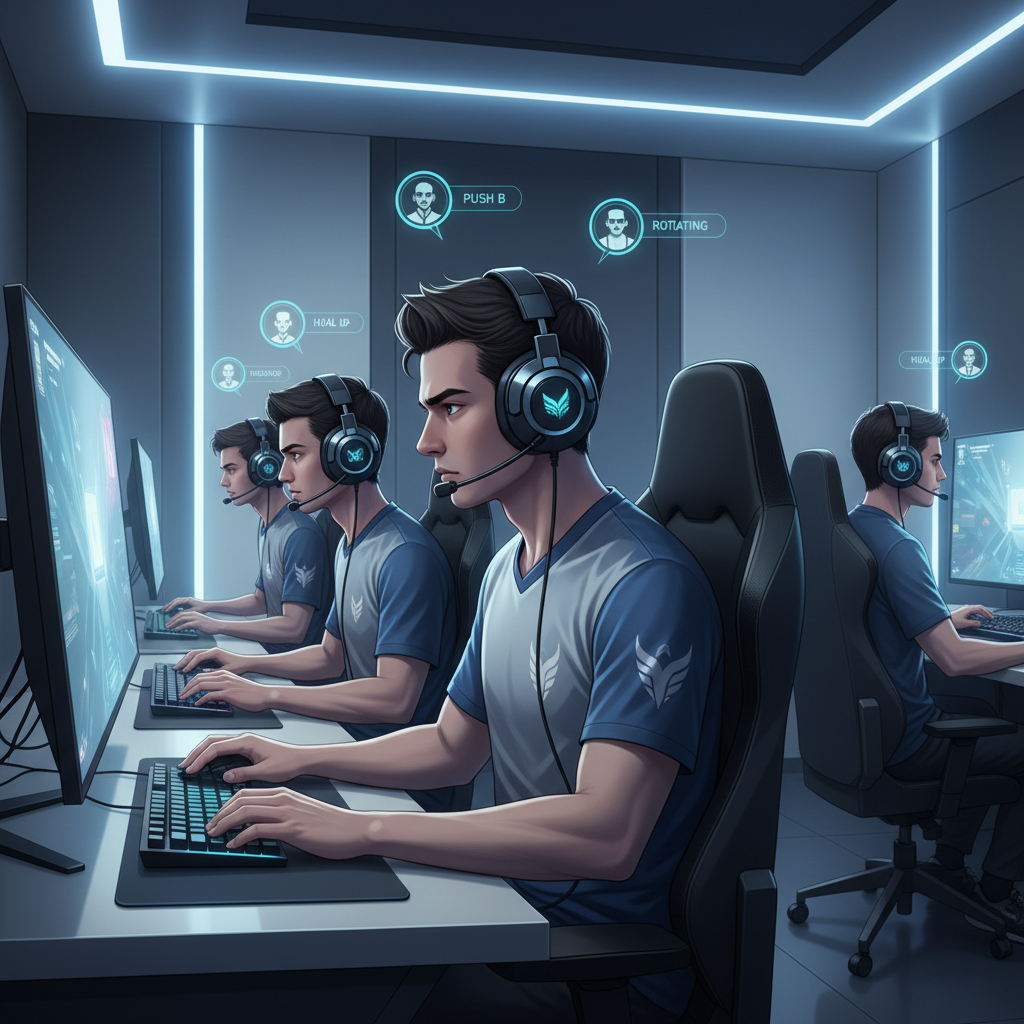
Why team comms break (and what to fix first)
Most comm problems look like “people talk too much” or “nobody talks,” but the root causes tend to be simpler, and fixable.
- No shared language: one player says “on me,” another says “left,” another says “they’re there,” and nobody knows where “there” is.
- Mixed priorities: one person calls targets, another calls rotations, someone else argues about the last round.
- Timing issues: the callout lands after the fight is already decided, so people stop trusting comms.
- Audio clutter: open mics, loud keyboards, music, or game audio that drowns teammates.
- Ego and blame loops: once comms become criticism, players either tilt-talk or go silent.
Fix order matters. In most squads, cleaning up timing and clarity brings faster improvement than inventing new “strategies.”
A quick self-check: what type of comms problem do you have?
Before you change everything, diagnose the pattern. You’ll pick better fixes, and you’ll avoid the classic mistake of adding rules that nobody follows mid-fight.
| What you hear | What it usually means | Fastest adjustment |
|---|---|---|
| “He’s one shot!” but no one cleans up | Missing location + timing + target ID | Add location + ping + name: “Valk one, back stairs” |
| Everyone talks during fights | No “fight lead” or priority rules | One shot-caller in fights, others short updates |
| Silence until someone dies | Fear of being wrong, or no comm habit | Use simple templates: info → plan → confirm |
| Arguing after each round | Review happening at the wrong time | Park it: “post-round,” not “mid-round” |
| “Where are you?” constantly | Poor map references or no pings | Agree on map callouts, use pings as backup |
If you’re seeing multiple rows, pick the one that costs you the most rounds, fix that for a week, then stack the next change.
Build a simple callout system your team will actually use
The best team communication tips gaming usually sound boring because they’re repeatable. In practice, you want short, standardized callouts that survive stress.
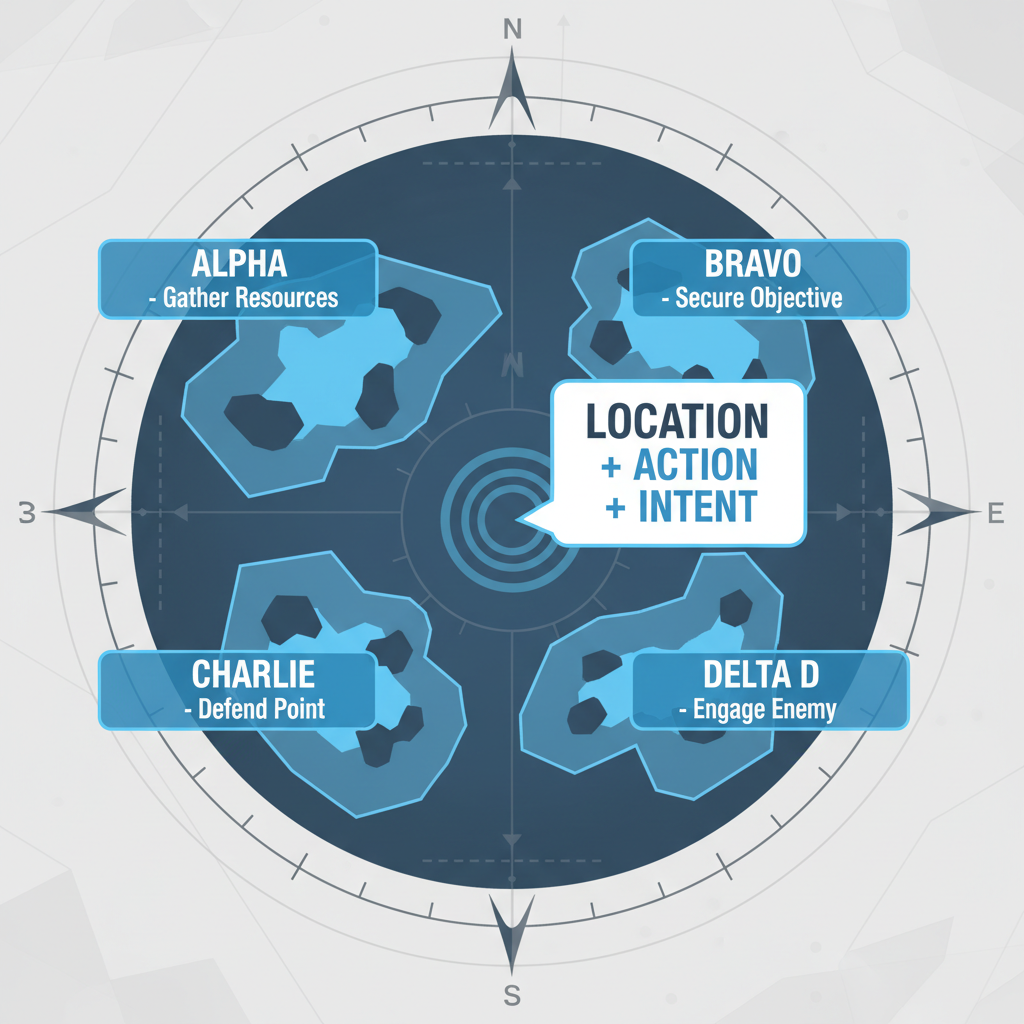
Use the “3-part callout” template
- Location (where): named area, compass, or landmark.
- Action (what): pushing, holding, healing, reloading, rotating.
- Intent (what you want): swing, reset, smoke, trade, back up.
Example: “Top mid, two pushing, I’m backing, play trade.” Short, actionable, no storytime.
Agree on a “good enough” map vocabulary
You don’t need perfect callouts for every corner, you need consistency. For many groups, 15–30 shared names per map covers most fights. If the game has built-in location labels, use those.
According to NVIDIA (via its GeForce guides on system and audio setup), reducing audio distractions and tuning levels can improve your ability to react to cues, which indirectly supports clearer, faster comms when the game gets chaotic.
Assign comm roles: not “captain,” just priorities
Teams get better when everyone knows what they’re responsible for saying. This is where a lot of stacks resist, because it feels “too serious,” but roles can be lightweight and still work.
- Fight lead: calls focus target, push/stop, and reset timing during engagements.
- Macro lead: calls rotations, zone timing, economy, or objective setup between fights.
- Info relays: everyone else shares short, factual updates: damage, cooldowns, numbers, angles.
One person can hold both lead roles in casual play, but in higher tempo games it’s often cleaner to split them. The point is priority: when the fight lead speaks mid-fight, everyone else compresses their comms.
Set one rule that prevents chaos
Try: “During a fight, only info or direct responses.” Reviews, debates, and sarcasm wait until the round ends. This single constraint fixes more comms than most people expect.
Voice and audio settings that make comms easier (not louder)
Some “bad comms” is just bad audio. You don’t need expensive gear, but you do need clean input and predictable levels.
- Push-to-talk vs open mic: open mic can work in disciplined groups, but push-to-talk often reduces clutter for most teams.
- Noise suppression: use Discord/console noise filters if your room is noisy, but test it so it doesn’t clip your first syllable.
- Balance game vs voice: lower game effects slightly so voices stay intelligible during ultimates, explosions, or killstreaks.
- Mic technique: consistent distance beats “better mic.” Too close creates pops, too far sounds thin.
According to Discord (in its support documentation on audio and voice troubleshooting), correct input/output selection and proper gain levels are common fixes for voice issues like distortion, cutting out, or inconsistent volume.
Practical drills: how to improve comms in a week
Talking about communication feels productive, but behavior changes faster with small drills. Keep it light, keep it repeatable.
Drill 1: “Plan + confirm” at the start of every round
- One sentence plan: “We play slow, hold B, rotate on info.”
- Everyone confirms with one word: “Yes,” “copy,” “holding.”
This forces alignment without a speech.
Drill 2: 10-second debrief after the round
- One person: “What was the key mistake?”
- One person: “What do we do next round?”
Keep it tactical, not personal. If someone starts blaming, cut it off and move on.
Drill 3: “Silence windows” in fights
Pick one moment where comms usually explode, like the first contact, and practice staying quiet unless you have actionable info. It feels weird at first, then suddenly everything becomes readable.

Mistakes that quietly ruin comms (even with “good vibes”)
A friendly squad can still have unusable comms. These are the patterns that sneak in.
- Over-explaining: if the callout needs a backstory, it’s too long for a fight.
- Unverified certainty: “They’re all A” when you saw one player. Say “at least one” unless you know.
- Late hero comms: calling “I’m flanking” after you already left, your team can’t plan around it.
- Passive aggression: “Nice rotation” kills future callouts, even if you think it’s a joke.
- Stacking comm channels: voice + text + pings can be great, but only if you decide which channel is primary mid-fight.
One small habit that helps: when you’re frustrated, switch to a fact. “Two top left” is useful, “why is nobody here” isn’t.
When to get outside help (coaching, team review, or tool changes)
If you’re consistently stuck, it may not be effort, it may be structure. A little outside input can save weeks.
- Recurring same mistake despite “talking about it”: consider a VOD review with someone neutral, or a coach if your team plays competitively.
- Communication anxiety where players freeze: a supportive coach or structured scripts can reduce pressure.
- Serious conflict that spills beyond the match: it might be healthier to reset expectations, change roles, or even change roster.
If comm problems connect to stress, sleep issues, or persistent anger, it can be worth talking to a qualified professional. That’s not “overreacting,” it’s just taking performance and wellbeing seriously.
Key takeaways you can use tonight
- Clarity beats volume: short callouts with location + action + intent outperform nonstop chatter.
- Roles reduce overlap: pick a fight lead, everyone else provides quick info.
- Audio hygiene matters: clean input and balanced levels make good comms possible.
- Review after: keep mid-round comms strictly actionable, save debates for short debriefs.
To put these best team communication tips gaming into action, pick one change that reduces chaos right away, usually a callout template or a fight lead, then run it for a week without rewriting the whole playbook.
If you want an easy starting point, agree on 20 map callouts, set one “fight comm priority” rule, and do 10-second debriefs. It’s simple, but simple is what survives ranked pressure.
FAQ
What are the best team communication tips gaming for ranked play?
Prioritize speed and actionability: location-first callouts, one person leading fights, and minimal chatter during first contact. Ranked punishes hesitation more than imperfect phrasing.
How do we stop talking over each other in fights?
Give one player “fight lead” authority and set a rule that everyone else only shares info or answers questions during engagements. It can feel strict, but it usually makes games calmer within a few sessions.
Is push-to-talk better than open mic for competitive gaming?
For many teams, yes, because it cuts background noise and accidental comm spam. Open mic can work if everyone has clean audio and good discipline, otherwise it often snowballs into clutter.
How can a quiet teammate communicate without feeling awkward?
Scripts help. Start with two things: numbers and location, like “two mid” or “one flank right.” Once that’s comfortable, add intent: “I’m holding” or “I’m backing.”
What should we say when someone is low HP or “one shot”?
Attach the info your team needs to act: who, where, and whether you can follow up. “Reyna one, close left, I can swing” is more useful than “one shot!” by itself.
How do we handle mistakes without tilting comms?
Move feedback to a post-round debrief and keep it specific. “Next time we wait for smoke” lands better than “you threw,” and you’ll get more honest comms next round.
Do pings replace voice callouts?
Pings are great for precision, but voice still carries intent and timing. The best setup is usually: ping for exact location, voice for what the team should do about it.
If you’re trying to improve team play quickly, a lightweight comms checklist and a shared callout sheet can make practice feel less like arguing and more like progress, especially if your group rotates games and needs a consistent baseline.