
how to last hit minions efficiently comes down to two things you can actually control: damage timing and wave position, not “faster hands” or fancy mechanics.
If you’ve ever walked out of lane feeling like you played fine but still can’t afford your core item on time, this is usually why. Missed last hits quietly snowball into lost power spikes, which then turns into “I can’t fight” and “my jungler never helps” frustration.
This guide focuses on practical cues you can reuse across most MOBAs: how to read minion health, how to avoid pushing by accident, and how to build a simple practice routine that sticks.
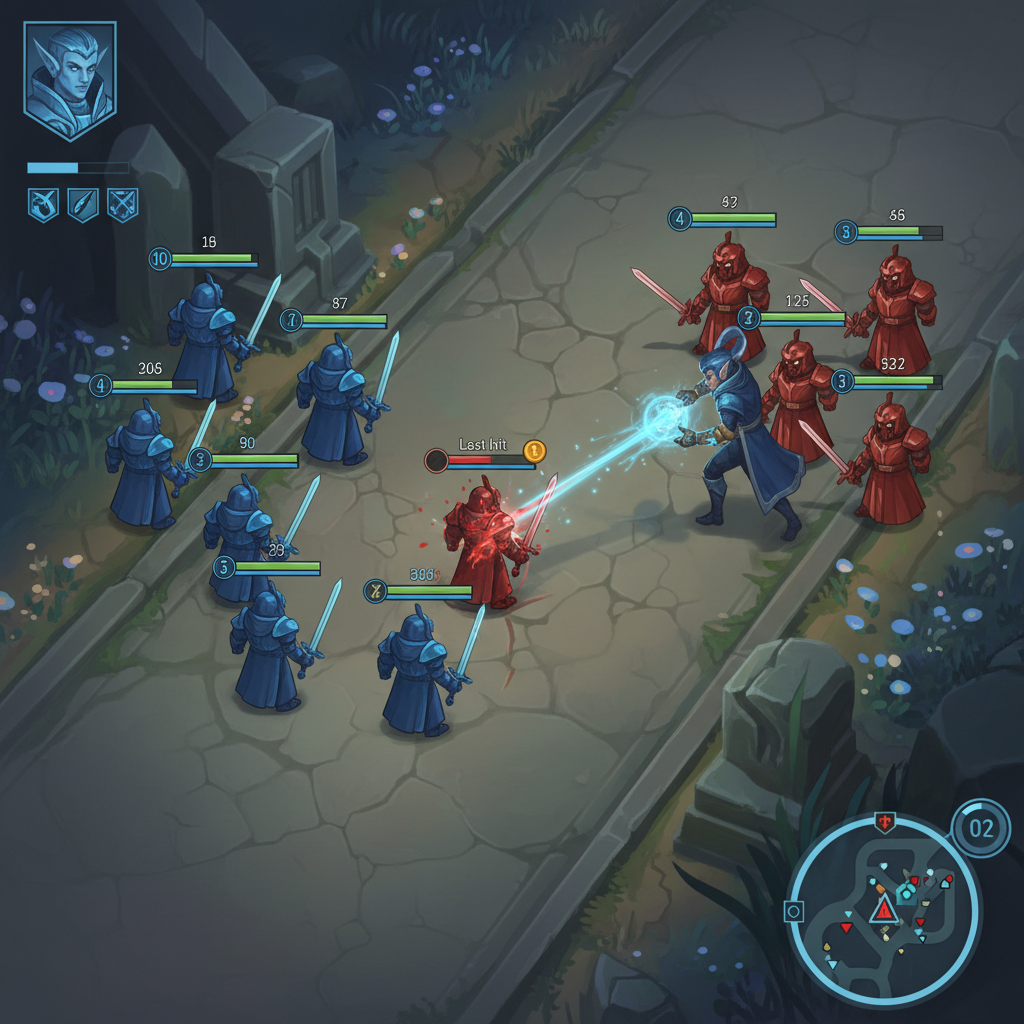
Why last hitting feels inconsistent (and what’s really happening)
Most players don’t miss because they “don’t know what a last hit is.” They miss because lane damage is messy: minions shoot at different rates, your own minions swap targets, and your champion’s attack wind-up adds a delay you don’t feel until it’s too late.
- Auto-attack wind-up: the animation delay before damage lands, which varies a lot by hero.
- Projectile travel time: ranged basics can arrive late, especially if you step back mid-shot.
- Minion focus changes: one minion turning to a new target can swing a health bar faster than you expect.
- Accidental pushing: using AoE or “helpful” poke on the wave makes the health bars harder to read.
According to Riot Games (via League of Legends educational resources and official communications around gameplay fundamentals), consistent CS is one of the most reliable predictors of steady gold income early. Even if you play another MOBA, the underlying principle stays the same: dependable gold comes from repeatable last-hit habits.
Quick self-check: what type of last-hit problem do you have?
Before you fix anything, diagnose the failure mode. Different problems need different drills, and guessing wastes time.
- You miss “easy” last hits under no pressure: timing and wind-up awareness issue.
- You last hit fine until trading starts: attention management and camera/spacing issue.
- You’re always under enemy tower: wave control and recall timing issue, not “mechanics.”
- You get some CS but the lane constantly shoves: spell usage and auto-attack discipline issue.
- You panic under your own tower: turret math issue and pre-hit planning issue.
Be honest here. If you can’t last hit in an empty lane, wave control tips won’t magically help.
Core mechanics that make last hits easier (without speeding up)
1) Pick a “commit point” instead of reacting late
A common habit is waiting until a minion is at a sliver of health, then clicking. That’s reaction-based and unreliable. A better approach: decide a health threshold where your basic attack plus wind-up will land in time, then commit.
- For melee heroes, your threshold can be later because damage lands quickly.
- For ranged heroes, commit earlier because projectile travel steals time.
If you want a simple cue: when a minion is being hit by two friendly minions, its HP often drops faster than your eyes expect. Commit earlier than feels “safe.”
2) Stop “helping” the wave unless you mean to
Many players unintentionally sabotage how to last hit minions efficiently by auto-attacking constantly. It makes the wave shove, it changes minion target order, and it forces you to last hit in worse positions.
- When you don’t have a clear reason to push, keep autos minimal.
- Use “last hit only” mindset: click minions when they’re in your commit window.
- Be careful with on-hit splash, chain lightning, pets, and burn effects that skew damage.
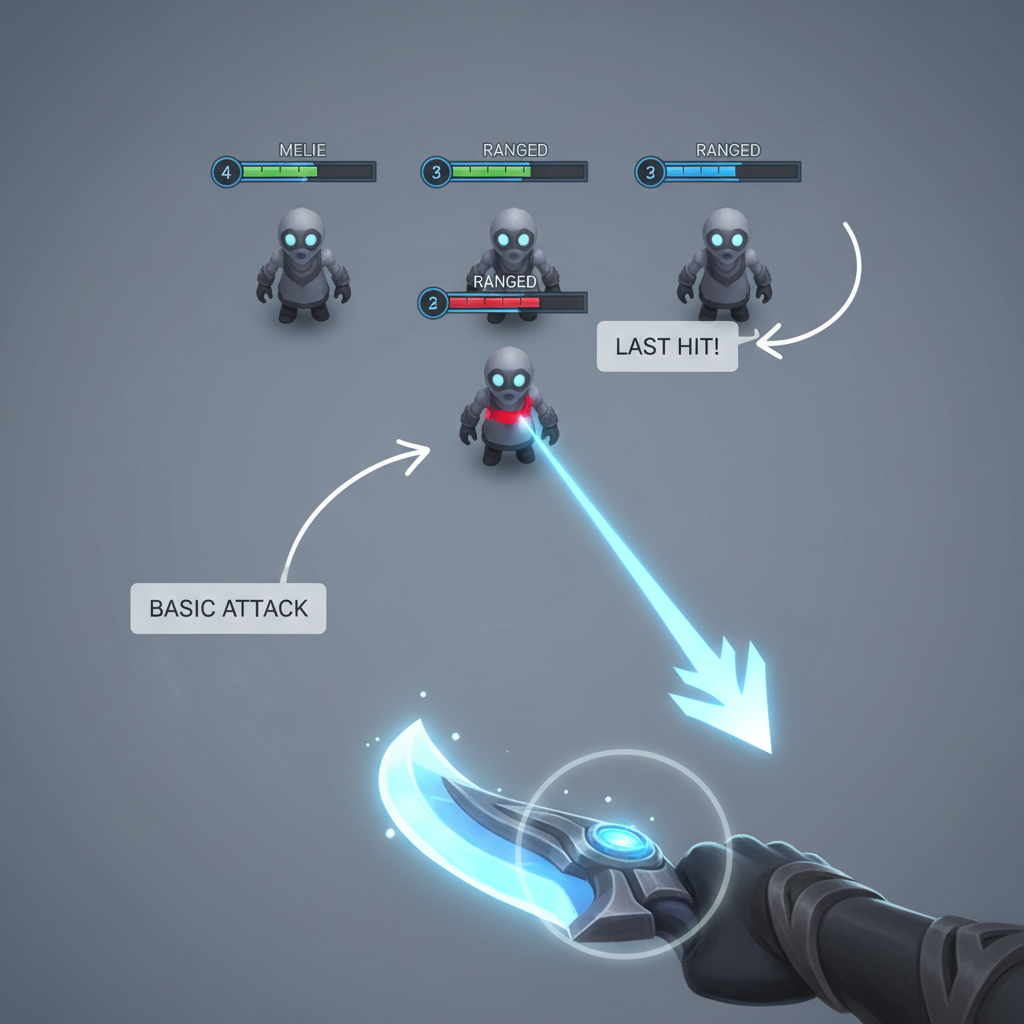
Wave position: the hidden reason your last hits get stolen
Last hitting is easier when the wave sits in a stable spot. If the wave is always moving, you’re constantly adjusting range, threat level, and turret interaction.
Three lane states to recognize fast
- Freeze: wave stays near your side; safer, easier to farm, harder for enemy to all-in you.
- Slow push: your wave builds up; good for roaming or setting up a recall.
- Hard push: you clear fast; good for crashing into tower and resetting.
If your goal is purely CS consistency, a light freeze or stable near-your-tower position often reduces pressure and makes the health bars more predictable.
One practical rule
If you’re ahead and want safe income, avoid mindless pushing. If you need to recall, push with intent, crash the wave, then leave. The “in-between” shove is where you lose the most minions to bad timing and ganks.
Turret last-hitting: a simple table you can apply
Turret farming is where a lot of lanes fall apart. You don’t need perfect math, but you do need a default plan. Your damage and the specific MOBA will vary, so treat this as a starting framework and adjust after a few reps.
| Minion type | Common turret pattern | Practical last-hit plan |
|---|---|---|
| Melee | Usually survives more turret shots | Let turret hit, then last hit; if your hero is weak early, consider one light pre-hit |
| Caster/Ranged | Often dies quickly to turret | Pre-hit once if needed, let turret shot land, then finish with a basic |
| Siege/Cannon | Takes longer; timing feels awkward | Use basics to “walk it down,” watch for your own minions adding surprise damage, save a low-commit spell if required |
What makes this tricky is friendly minions. They can “ruin” your expected turret pattern by adding a random extra hit. When you’re under tower, glance at which friendly minions are targeting the same target before you commit.
Practical drills: build consistency in 15 minutes
Most players try to fix CS only in ranked games, then wonder why it never stabilizes. If you want how to last hit minions efficiently to feel automatic, you need a low-stress drill that isolates the skill.
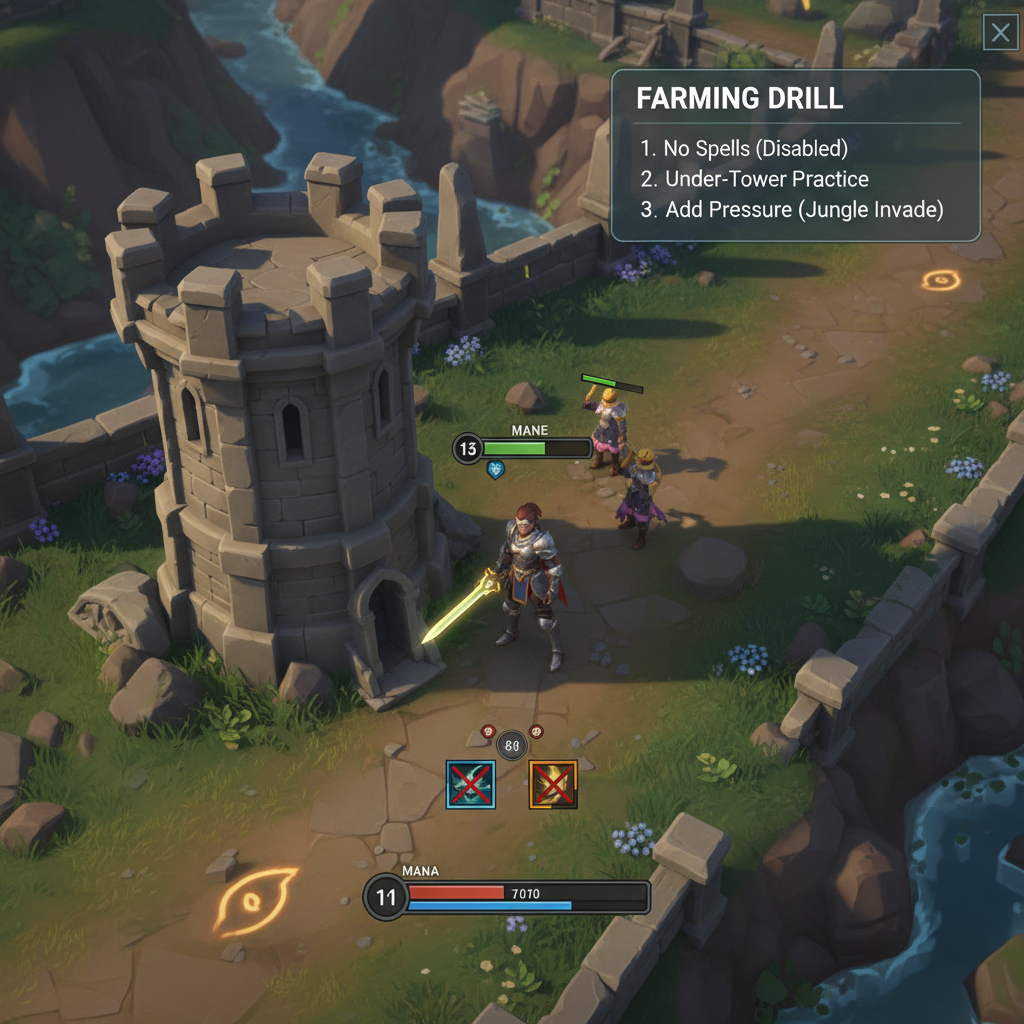
Drill A: 10-minute no-spell last-hit challenge
- Go into a practice mode or low-stakes match.
- For 10 minutes, last hit using basics only.
- Goal: reduce “panic clicks” and learn your wind-up.
If you catch yourself auto-attacking full time, pause and reset the rule. This drill works because it forces discipline, not because it looks impressive.
Drill B: Under-tower reps on purpose
- Let the wave push into you for a few minutes.
- Practice the turret patterns from the table, adjust with one pre-hit if you miss.
- Track which minion type you miss most, then repeat only that scenario.
Drill C: Add light pressure
Once basics feel stable, add a bot or a friend who pokes you lightly. The goal is not “win trades,” it’s maintaining last-hit decisions while your attention splits.
Common mistakes that look “fine” but kill your CS
- Using AoE to poke and “just happen” to hit the wave: you lose control of the health bars, then blame mechanics.
- Standing too far back: safe positioning matters, but if you’re out of range when the minion enters kill range, you miss anyway.
- Not adapting after you buy damage: items change your threshold; your old commit point becomes late.
- Taking every trade: some matchups demand respect. Eating two abilities to secure one minion is rarely worth it.
- Over-focusing on “perfect CS”: when a wave is doomed, it’s okay to grab what you can and protect your HP.
One more subtle one: if you’re trying to last hit while also constantly panning the camera, your timing slips. Stabilize your view during the critical moments, then look around between waves.
When you may need role-specific or coaching help
If you’ve put in real reps and CS still collapses in real games, the bottleneck might not be last hitting at all.
- You play a support/roam-heavy role: your “efficient” plan might be wave timing for roams, not raw CS.
- You main a hero with unusual autos: some kits have odd wind-ups or empowered basics; a hero-specific guide helps.
- You tilt under pressure: anxiety or frustration can speed up clicks and ruin timing; a coach can help with decision routines.
Also, if your setup causes input delay or frame drops, it can mimic “bad mechanics.” Checking settings, ping stability, and FPS cap is sometimes the most practical fix.
Key takeaways and next steps
Getting better at last hits is rarely about grinding harder, it’s about removing chaos. Keep autos intentional, learn your commit window, and aim for a wave position that doesn’t force constant turret farming.
- Action step 1: run the 10-minute no-spell drill three times this week, same hero each time.
- Action step 2: in real matches, pick one lane goal per phase, freeze for safety or push to recall, not both.
If you do those two consistently, how to last hit minions efficiently stops feeling like a mystery and starts feeling like a routine.
FAQ
- How do I last hit minions efficiently when the enemy keeps poking me?
Prioritize health over one minion, then farm in safer windows. Often you can give up a couple CS early and still win later if you avoid forced recalls. - Should I use abilities to secure last hits?
Usually yes when it prevents a miss or protects wave state, but random ability use tends to shove the lane. Save spells for cannons, under-tower fixes, or when you’re intentionally pushing. - Why do I miss more CS after I buy items?
Your damage threshold changes, so your old timing becomes late. After each buy, take a wave to “recalibrate” your commit point instead of playing on autopilot. - What’s a good CS goal for most MOBAs?
Targets depend on the game, role, and match pace. A more useful goal is “miss fewer free minions” and track improvement over 5–10 games. - How can I practice last hitting without wasting teammates’ time?
Use practice mode, bots, or unranked queues for focused drills. In ranked, keep your practice goal small, like turret CS only, so you still play to win. - Is freezing always better for farming?
No. Freezing helps safety and predictability, but it can block your recall timing or map impact. Use it when you’re vulnerable, not as a default rule. - What if my hero’s auto attack feels “clunky”?
That’s common with certain animations. Try a hero-specific combo/timing guide, and in the short term, commit earlier and reduce movement during the wind-up.
If you’re trying to improve CS quickly but don’t want to guess which drill or wave plan fits your role, a lightweight coaching review or a role-specific checklist can save time, even just one focused session can clarify what to practice next.