
co op horror games for pc and console are at their best when everyone knows what they signed up for: tense teamwork, occasional screaming, and a plan for when things go sideways.
If you have ever spent 30 minutes debating what to play, then bounced because someone cannot host, someone hates jump scares, and someone only owns a console, you are not alone. Co-op horror is picky: the wrong match can feel slow, unfair, or just not scary in a group.
This guide focuses on practical selection: what style of horror fits your friends, what to check before you buy, and a few “works for most groups” picks across PC and console. I will also call out common traps like confusing “co-op” with “crossplay,” or assuming every horror game supports a full party.
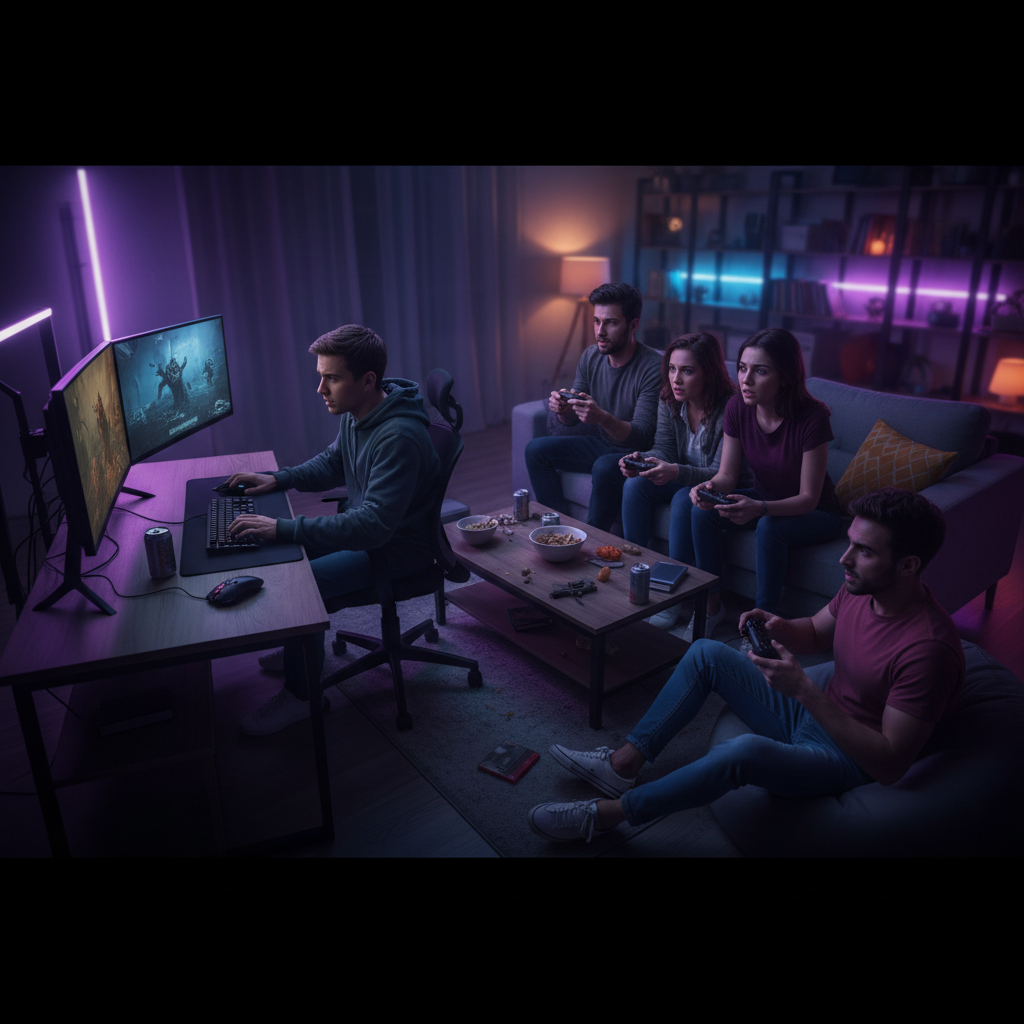
What players usually mean by “co-op horror” (and why it matters)
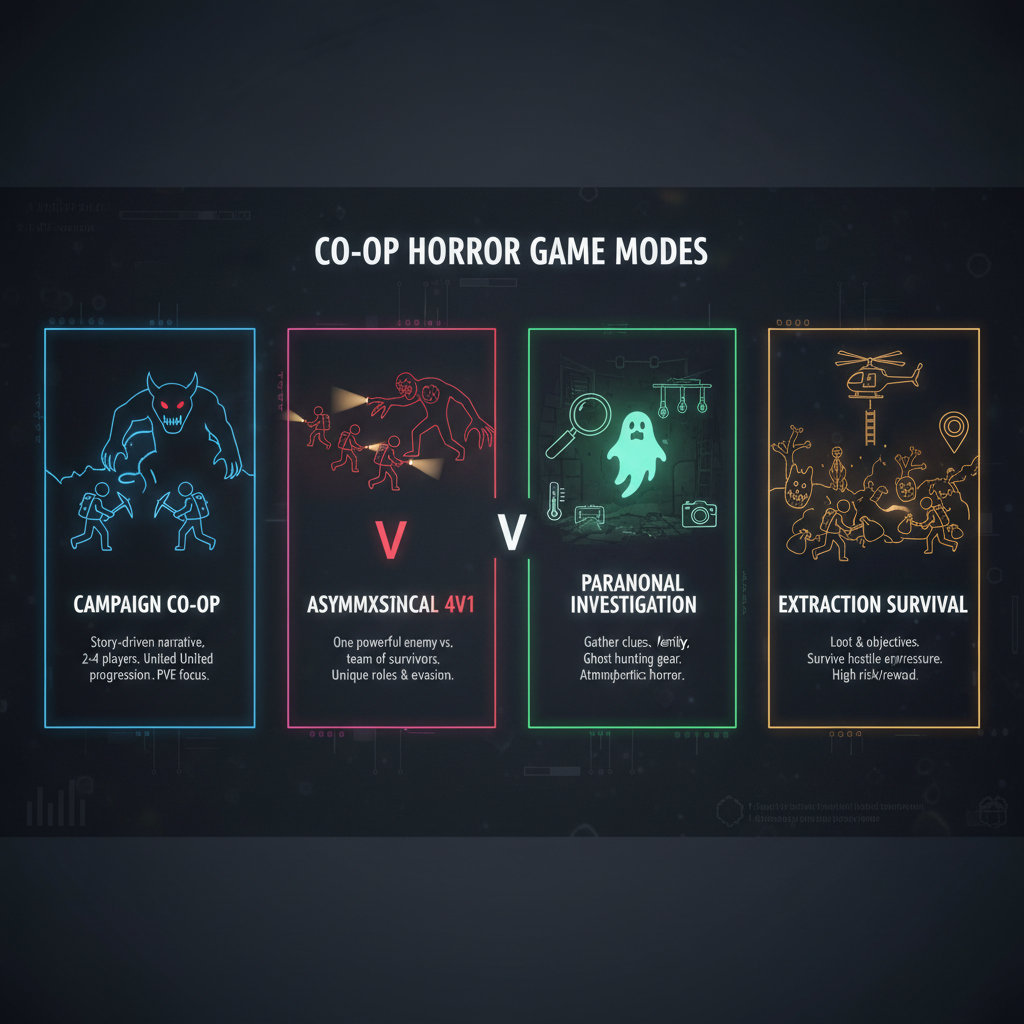
“Co-op horror” gets used for a few different experiences, and the difference affects whether your group has fun or gets frustrated.
- Co-op campaign: everyone plays on the same side through missions or a story. Good for groups that want progress and structure.
- Asymmetrical horror: one player is the monster, the rest are survivors. Great for short sessions, not always great if your group hates being targeted.
- Survival crafting with horror tone: scary setting, but the loop is building, managing resources, and exploring. Works for longer nights.
- Party-horror / social deduction: horror flavor plus deception and arguments. Fun, but can be a mood killer if the group wants pure scares.
Quick reality check: many “co-op” listings mean online co-op, not couch co-op, and many “multiplayer” horror games are PvP-first. That is why a little pre-pick homework saves your night.
A quick comparison table: pick a vibe before you pick a game
If you want faster decisions, start with the vibe your group actually enjoys, then narrow by platform and party size.
| What your group wants | Best-fit co-op horror style | Typical party size | What can go wrong |
|---|---|---|---|
| Constant tension, teamwork under pressure | Objective-based co-op | 2–4 | One player “carries,” others feel lost |
| Laughing + screaming, short rounds | Asymmetrical or extraction-style | 4–5+ | Balance issues, friends tilt fast |
| Story night, slower pace | Co-op campaign | 2–4 | Hosting or pacing problems |
| Exploration, base building, spooky atmosphere | Survival-crafting with horror elements | 2–8+ | Not “scary enough” for some |
Solid co-op horror picks for PC and console (with who they suit)
Below are popular options that many groups end up circling back to, plus the “why” behind each pick. Availability and features change over time, so treat this as a shortlist to verify on your storefront.
Phasmophobia (PC, also on consoles depending on release timing)
This is the go-to for groups who want communication-driven fear. You investigate a haunted location, gather evidence, and try to leave before the ghost decides you are the problem.
- Best for: 3–4 friends who enjoy callouts and roles
- Watch-outs: voice features and accessibility preferences vary by setup
The Outlast Trials (PC and consoles)
If your group likes co-op missions with a nasty edge, this tends to land well. You are completing objectives while being hunted, which keeps everyone moving.
- Best for: players who want action pressure, not slow puzzle-solving
- Watch-outs: intensity is higher, some players bounce off the brutality
Dead by Daylight (PC and consoles)
Classic asymmetrical horror: one killer, four survivors. It is less “shared story” and more “shared panic,” and it works when your group can laugh off bad rounds.
- Best for: 4 friends who want quick matchmaking sessions
- Watch-outs: competitive tilt, meta builds, and skill gaps
GTFO (PC)
This is a tougher, coordination-heavy co-op horror shooter. When it clicks, it feels like a clean team execution. When it does not, it feels like you brought knives to a gunfight.
- Best for: groups that like planning, stealth, and repeating runs
- Watch-outs: difficulty can be a wall without patience
Resident Evil 5 / Resident Evil 6 (PC and consoles)
More action-horror than pure terror, but these remain reliable for a two-player night with clear progression and a familiar franchise tone.
- Best for: duos who want campaign structure
- Watch-outs: older design choices, co-op feel depends on expectations
Fast self-check: how to choose the right game for your group
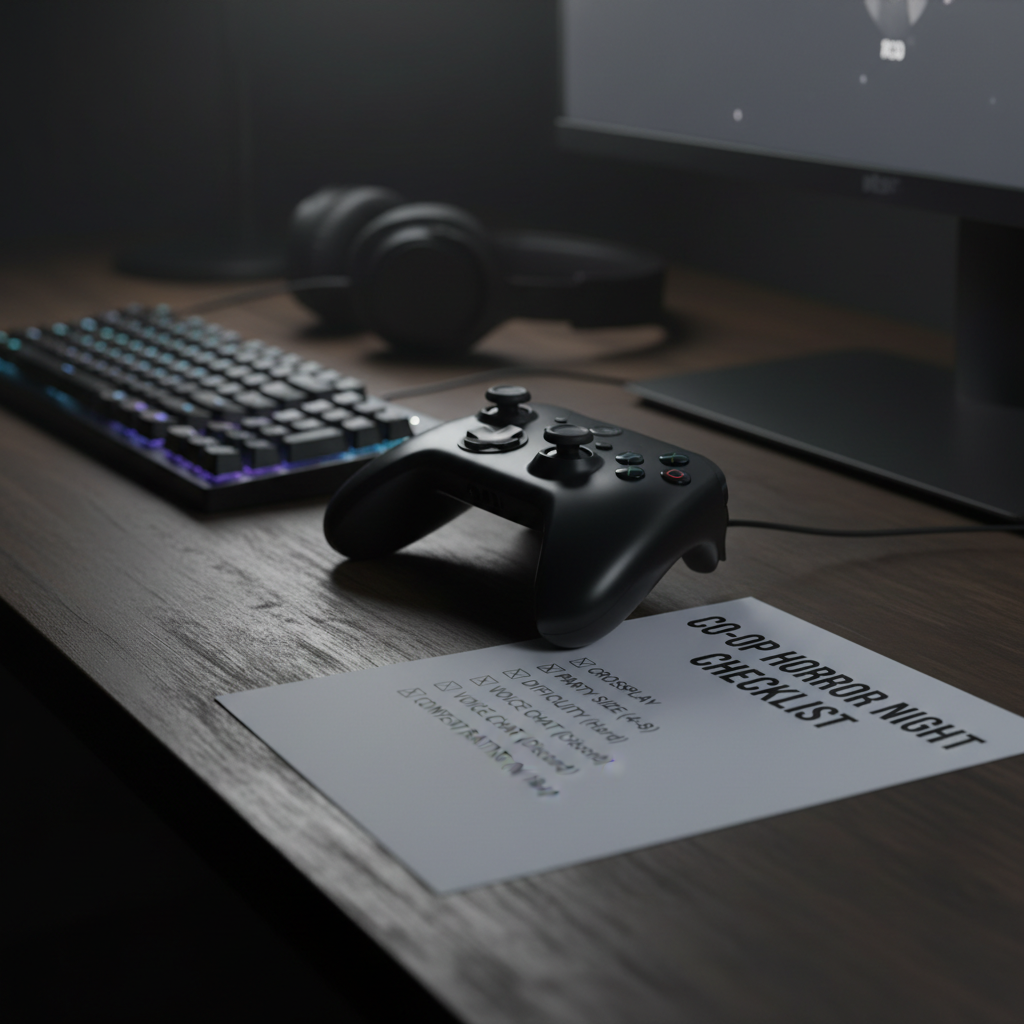
If you are stuck, run this checklist in your chat. You will usually get a clear winner in five minutes.
- Party size tonight: 2, 3–4, or 5+ makes a bigger difference than people think.
- Scare tolerance: do you want dread, jump scares, gore, or mostly vibes?
- Session length: one-hour quick hits versus a multi-night campaign.
- Failure tolerance: are you okay repeating missions, or do you want smooth progress?
- Communication style: some groups love constant comms, others prefer quieter play.
- Platform reality: are you truly split across PC and console, or can everyone meet on one?
That last line matters because “co op horror games for pc and console” often gets interpreted as “we can all play together,” but crossplay is a separate feature and it is not automatic.
Practical setup tips that prevent most co-op horror night problems
Most failed game nights are not about the game being bad, they are about friction. A few small habits keep momentum.
Decide the rules before you queue
- Pick one goal: laughs, scares, or progression, just one for tonight.
- Agree on difficulty early, “normal” is usually the safest first run.
- Set a timebox for switching games, like “two rounds, then reevaluate.”
Check these storefront items before buying
- Crossplay and supported platforms, verify on the official store page
- Co-op player count and whether private lobbies exist
- Required accounts, launchers, and online subscription needs on consoles
- Accessibility options: subtitles, color settings, motion blur toggles
Voice chat and comfort settings
If a game relies on voice, test levels in the lobby, not mid-chase. Also, if anyone in the group has anxiety triggers or sensitivity to intense content, it is reasonable to pick a less graphic option. According to ESRB, ratings and content descriptors can help you quickly spot themes like violence, blood, or strong language before you commit.
Common mistakes when shopping co-op horror across platforms
- Mistaking “multiplayer” for “co-op”: PvP horror can be fun, but it is a different social vibe.
- Assuming cross-gen equals crossplay: playing PS5 with PS4 is not the same as playing PlayStation with Xbox or PC.
- Over-indexing on popularity: some top games are great, but very meta-heavy, new friends may feel useless.
- Buying for the trailer, not the loop: ask, “What do we do every five minutes?” If that sounds boring, it will be.
If your group keeps bouncing off co-op horror, the issue is often mismatch: a stealth-heavy game with an impatient player, or a high-difficulty game with a casual crew. Fix the match, not the friends.
Key takeaways (so you can pick in 60 seconds)
- Start with vibe (campaign, investigation, asymmetrical), then filter by party size and platform.
- Verify crossplay on the store page, do not trust assumptions.
- Match difficulty to patience; tough co-op horror can be amazing or exhausting.
- Set a switch timer so the night stays fun even if the first pick flops.
Conclusion: a good co-op horror night is mostly a good match
The best co-op horror sessions are the ones where the game fits your group’s tolerance, attention span, and platform mix, then the scares do the rest. If you only do one thing, pick your party size and desired intensity, then confirm the co-op and crossplay details before anyone buys. That simple step saves money and saves the mood.
If you are deciding tonight, choose one “structured” option for reliable progress, and keep one “quick round” option as backup when someone joins late or needs a lighter pace.
FAQ
What are the best co op horror games for pc and console if we only have 2 players?
Look for co-op campaigns or duo-friendly mission games where one person is not stuck as “support.” Action-horror campaigns often work well for duos because pacing stays clear and sessions feel complete.
Do co-op horror games automatically support crossplay between PC and console?
No, crossplay is a separate feature and varies by title. Always confirm on the official store page or the publisher’s support site before you plan a mixed-platform night.
Which co-op horror style is best for casual friends who scare easily?
Investigation or lighter action-horror usually lands better than high-intensity stealth and chase games. You still get tension, but the pace gives people room to breathe.
How do we avoid getting bored after the first few matches?
Pick games with either a progression system, rotating objectives, or multiple difficulty tiers. Also, set mini-goals as a group, like “we leave with two pieces of evidence” or “no one splits up.”
What should we check before buying a co-op horror game on console?
Confirm online co-op player count, whether you need an online subscription, and whether private lobbies exist. Ratings and content descriptors are also worth scanning if your group avoids certain themes.
Are asymmetrical horror games good for friend groups?
They can be, especially if your group enjoys competition and can shrug off losing. If one friend gets frustrated easily, rotate roles or pick a co-op-only game for a calmer night.
Can co-op horror games be “too stressful” for some players?
Yes, and it is normal. If someone feels overwhelmed, lowering difficulty, reducing voice intensity, or switching to a less graphic title can help, and if anxiety is a concern beyond game night, it may be worth talking with a qualified professional.
If you are trying to build a reliable rotation of co op horror games for pc and console, keep a short list by vibe, one investigative pick, one action-pressure pick, one party-friendly option, then you will spend less time browsing and more time actually playing.